Exploring the Role of Art in Peacebuilding: Visit to GSO Oberschule mit Gymnasialer Oberstufe in Bremen
Date: May 8, 2026
Location: GSO Oberschule mit Gymnasialer Oberstufe, Bremen, Germany
As part of the International Bremen Peace Award Week 2026, Mahdi Yahya, founder and Chairman of Peace of Art International, and Vera Al Mawla visited GSO Oberschule mit Gymnasialer Oberstufe (GSO Bremen) for an inspiring exchange with students, educators, and school leadership focused on the role of art in peacebuilding and social transformation.
Known for its strong emphasis on arts education and creative learning, GSO Bremen welcomed the opportunity to learn directly from practitioners working at the intersection of culture, dialogue, and community development. The visit was organized to provide students and teachers with firsthand insights into how art can serve as a powerful tool for peacebuilding, especially in contexts affected by conflict and instability.
During the session, Mahdi Yahya shared his personal journey growing up in Lebanon and how witnessing the long-term effects of conflict inspired him to establish Peace of Art International. He spoke about the organization’s work using art, culture, education, and dialogue to bring together young people from different backgrounds and create opportunities for understanding, cooperation, and positive social change.
Drawing on experiences from Lebanon and other international contexts, Mahdi highlighted how artistic expression can help communities address division, strengthen social cohesion, and create spaces where difficult conversations can take place in constructive and meaningful ways. He also discussed the challenges and opportunities of implementing arts-based peacebuilding initiatives in environments affected by political instability, economic crises, and social polarization.
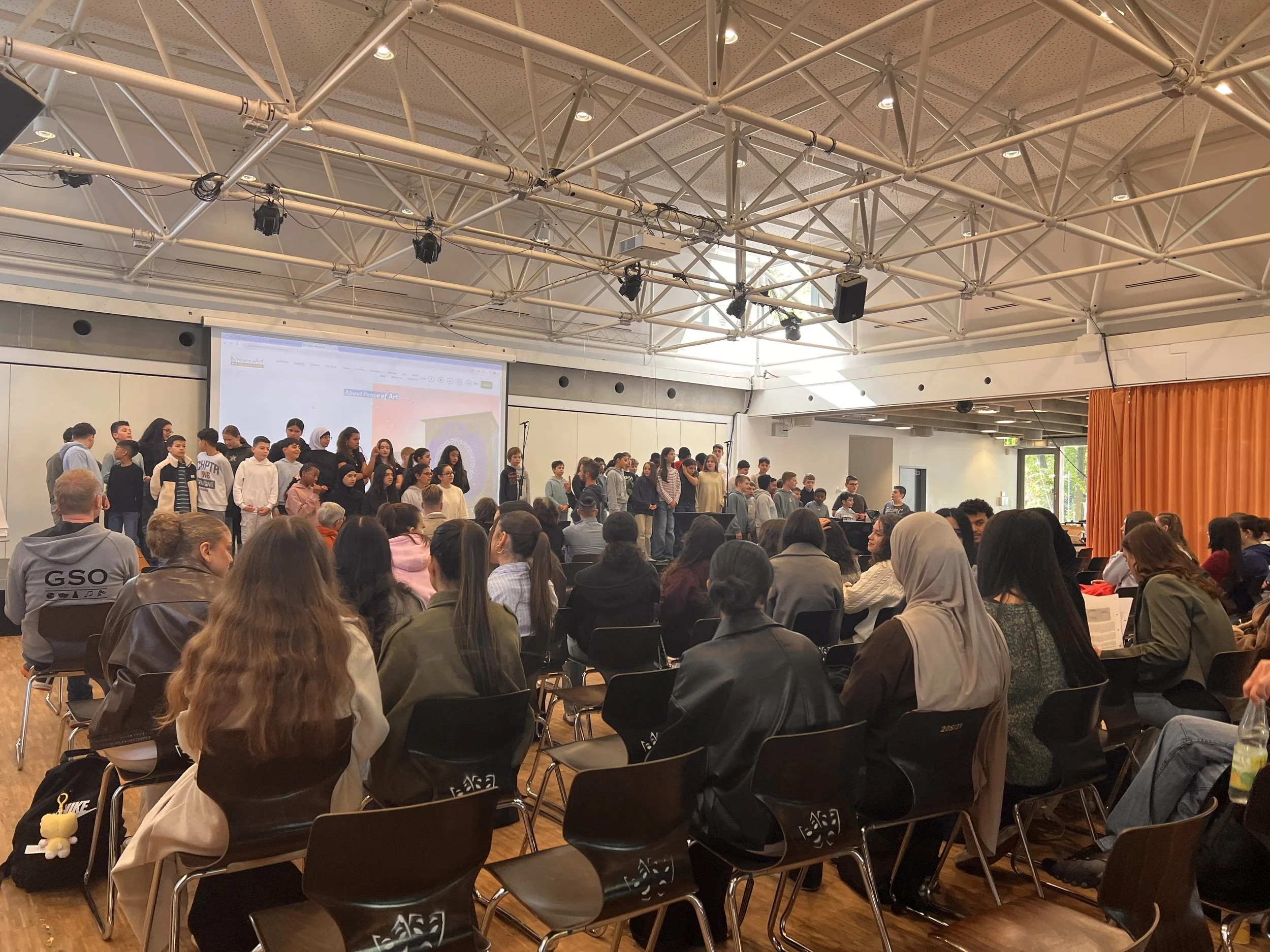
Students Welcome Mahdi Yahya with a Special Musical Performance
A particularly memorable moment of the visit came when the school’s orchestra welcomed Mahdi Yahya with a special musical performance. Accompanied by piano, students performed a song in a heartfelt gesture of friendship and appreciation. The performance added a deeply personal and emotional dimension to the exchange, demonstrating how music, like dialogue, can transcend cultural and linguistic boundaries. For Mahdi, whose peacebuilding journey began through arts and cultural engagement, the performance served as a powerful reminder of the universal language of creativity and its ability to bring people together across backgrounds and experiences.
Vera Al Mawla presented additional insights into the current situation in Lebanon and the realities facing young people and communities today. She shared examples from Peace of Art’s programs and humanitarian initiatives, illustrating how local organizations continue to support communities while promoting resilience, participation, and hope during challenging times.
The discussion quickly evolved into an engaging dialogue with students, who demonstrated remarkable curiosity and enthusiasm throughout the meeting. Numerous questions were raised on topics ranging from conflict transformation and intercultural dialogue to youth leadership, civic responsibility, and the role of creativity in addressing global challenges. Students also explored how artistic practices can contribute to peacebuilding efforts within their own communities and educational environments.
The active participation of students reflected the school’s commitment to critical thinking, creative expression, and global citizenship. The exchange created a valuable learning environment where personal experiences, professional expertise, and youthful perspectives came together in a spirit of openness and mutual respect.
For Peace of Art International, the visit represented another meaningful opportunity to connect with young people, share experiences across cultures, and reinforce the belief that education and the arts can play a vital role in building more peaceful and inclusive societies.
The encounter concluded with continued conversations about the importance of empowering young people through creativity, dialogue, and active engagement. It served as a powerful reminder that when students are encouraged to ask questions, challenge assumptions, and explore new perspectives, education becomes a catalyst for understanding, empathy, and positive change.
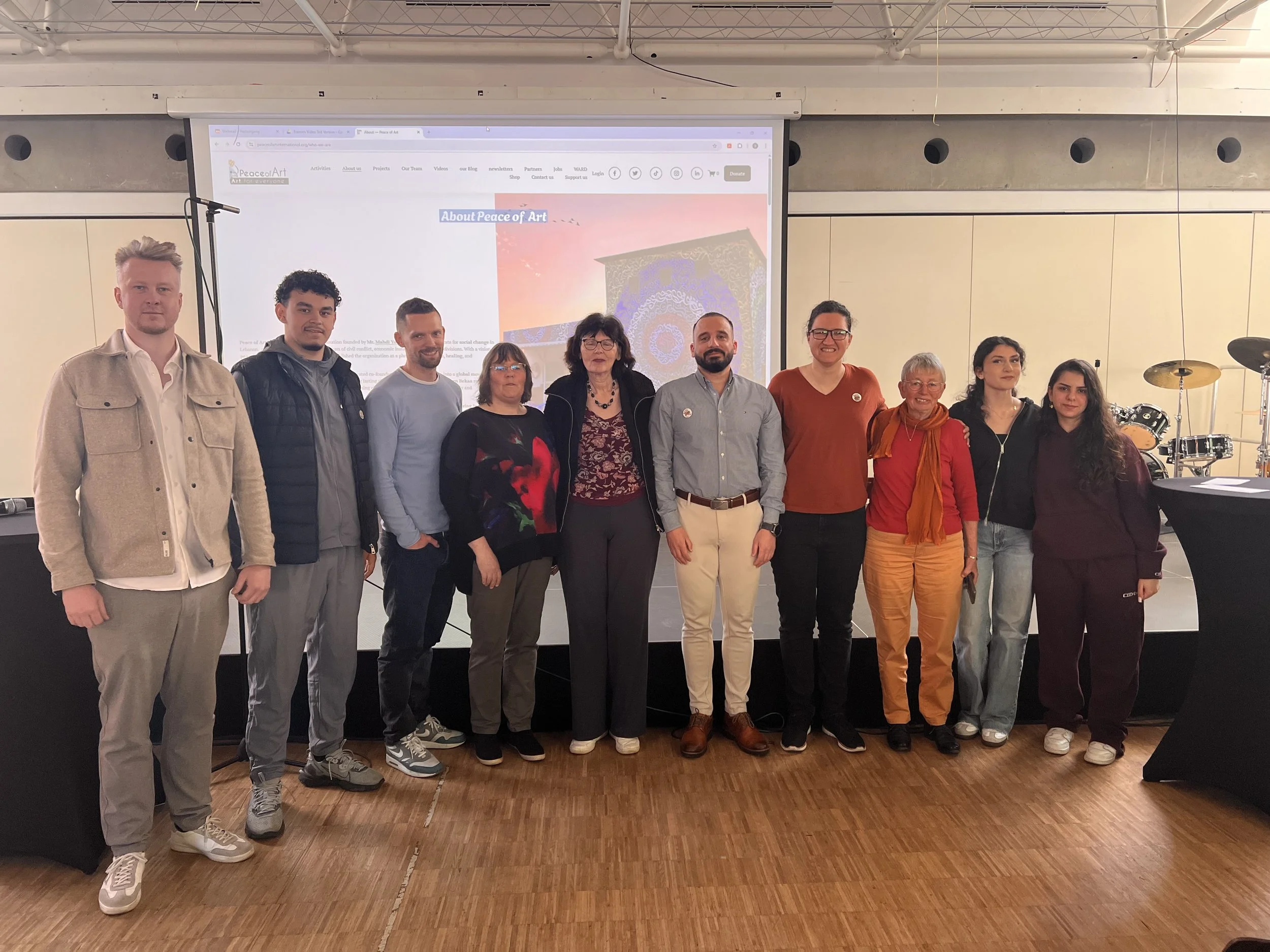
Group Photo with Die Schwelle Foundation and GSO Bremen
