From the Scars of Beirut to the Heart of Bremen
The Boy Who Chose Peace
On 8 May 2026, as I stood in Bremen’s historic Rathaus to receive the International Bremen Peace Award, my thoughts travelled back to North Bekaa in Lebanon.
Growing up, I often visited Beirut and saw a city carrying the scars of war. Damaged buildings and memories of conflict surrounded me, raising questions that stayed with me for years: Why do people destroy what others have worked so hard to build? Why is conflict so often inherited from one generation to the next?
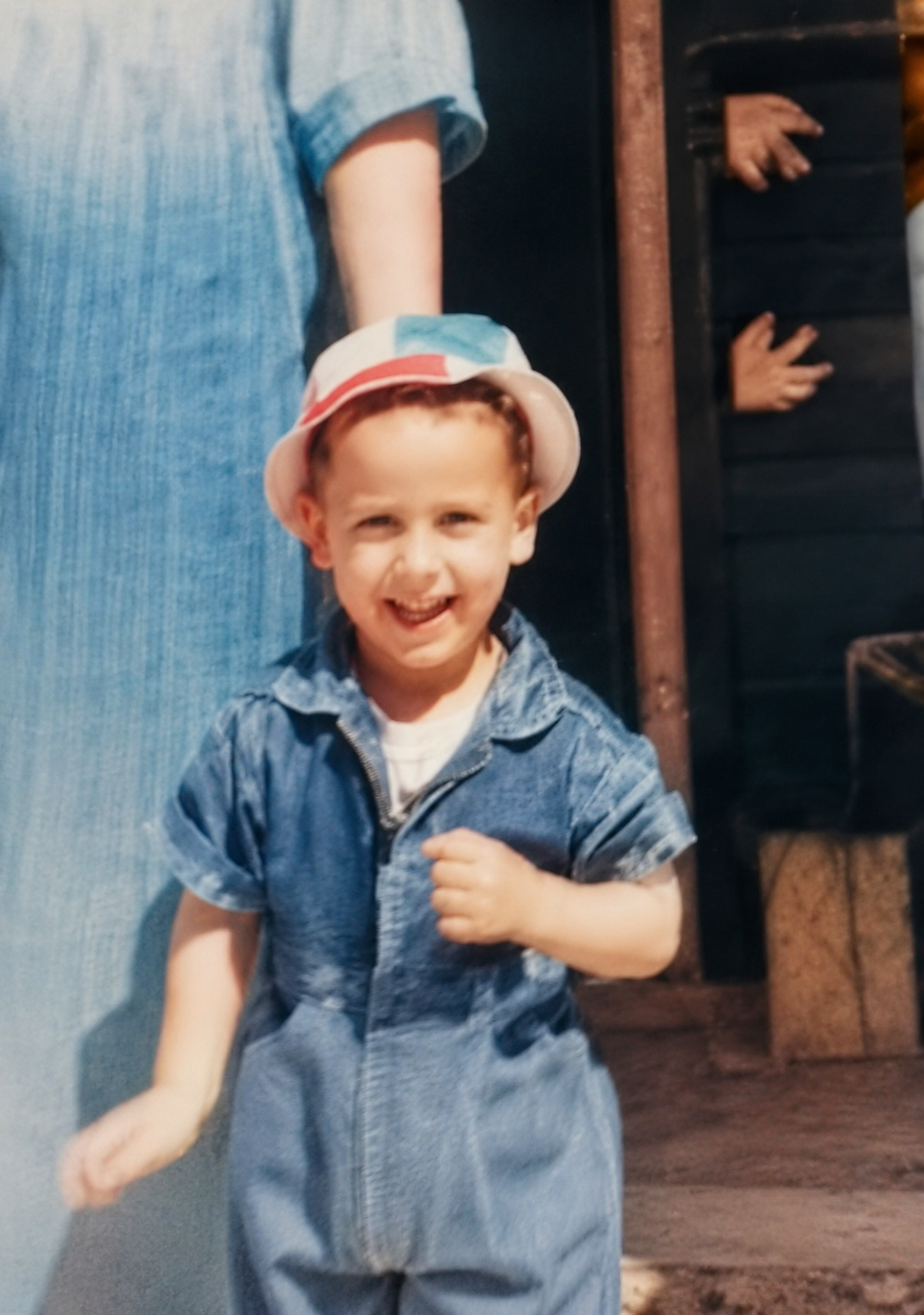
A childhood smile, a curious heart, and endless dreams waiting to unfold.
Photo of Mahdi Yahya as a child
As I grew older, I made a simple decision: I did not want war to define my future. I wanted to contribute to peace.
That belief eventually led to the creation of Peace of Art. What began as a small initiative grew into a community of volunteers, artists, trainers, and young people using art, culture, and dialogue to create positive change. Along the way, Vera Al Mawla became one of the strongest pillars of the organization, believing in its vision from the very beginning.
When Petra Titze from Stiftung die schwelle informed me that Peace of Art had been selected for the International Bremen Peace Award 2026, I immediately thought of everyone who had contributed to this journey.
The award was never about one person.
It belonged to every volunteer, partner, supporter, and participant who believed that even in places marked by conflict, peace can still be built.
Standing in Bremen, I realized that this recognition carried a powerful message: a child who grows up hearing stories of war can still choose peace.
A Welcome Before the Award
On 4 May 2026, Vera Al Mawla and I arrived in Bremen, not yet knowing that some of the most meaningful moments of the week would happen before the award ceremony itself.
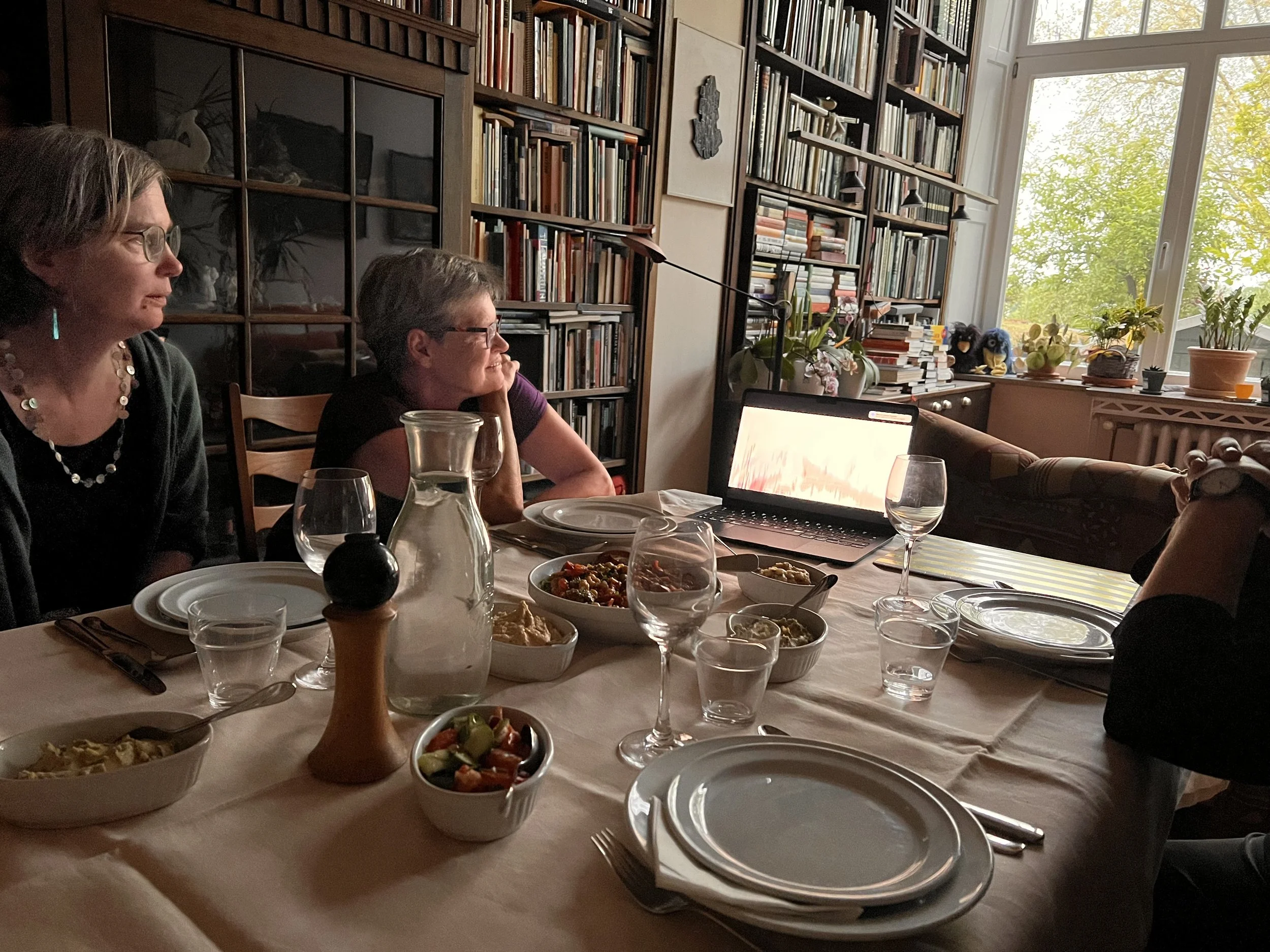
After checking into the MEININGER Hotel near Bremen Hauptbahnhof, we headed to the home of Beate Löwe-Navarro and her husband, where members of Stiftung die schwelle had gathered to welcome us. There, I met Anette Klasing, Chairwoman of the foundation, Petra Titze, Managing Director, Beate Löwe-Navarro, Pastorin Jenny Kauther, and journalist Thomas Joppig.
We did not arrive empty-handed. As a small gesture of appreciation from Lebanon, we brought handmade zaatar cultivated in the Peace of Art garden, as well as a small handmade Lebanese carpet created by women involved in our projects. For us, these gifts carried stories of resilience, creativity, and belonging.
From the moment we entered the house, we felt genuinely welcomed. The atmosphere was warm, relaxed, and full of curiosity. There was no formality or distance. Instead, it felt as if we were meeting old friends.
The dinner prepared by Beate and her husband was one of those moments I will remember for a long time. He served Pastel de Choclo, a traditional Chilean dish presented beautifully in clay bowls. Alongside it were oriental dishes, including Lebanese Baba Ghanouj. Every detail reflected care and hospitality. It was clear that a lot of thought had gone into making us feel comfortable and at home.
One particularly touching moment came when Vera sat at the piano and played several Lebanese melodies. Hearing familiar music while sitting in a home in northern Germany created a special feeling. For a few moments, the distance between Bremen and Lebanon seemed to disappear.
Throughout the evening, we spoke about the history of Stiftung die schwelle, the upcoming Bremen Peace Award ceremony, and the many projects and people connected to the foundation. I was especially impressed by the diversity of experiences around the table. Everyone brought a different perspective, yet all were united by a commitment to peace, dialogue, and human dignity.
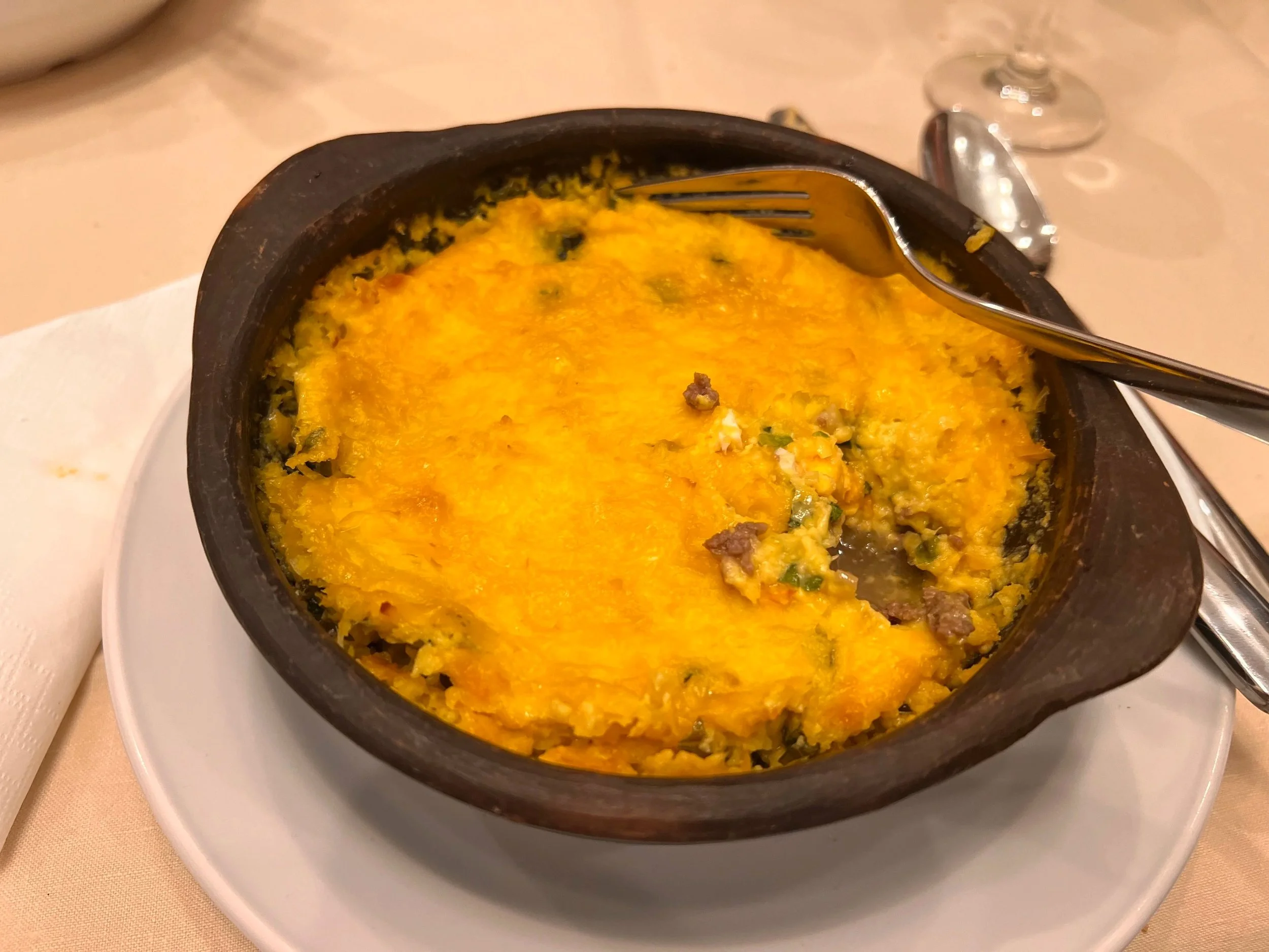
Pastel de Choclo, a traditional Chilean dish presented beautifully in clay bowls.
What struck me most was the passion of the people I met. Anette’s decades of work in peacebuilding and human rights, Petra’s dedication to organizing every detail of the award week, Jenny’s experiences working with refugee communities, Beate’s warmth and hospitality, and Thomas’s interest in stories and people all reflected the values that have shaped Stiftung die schwelle over the years.
When Vera and I finally left for our hotel later that evening, I felt something unexpected.
I no longer felt like a guest arriving in a foreign city.
I felt welcomed into a community.
And before the official program had even begun, Bremen was already starting to feel like home.
Learning from Bremen’s Young Generation
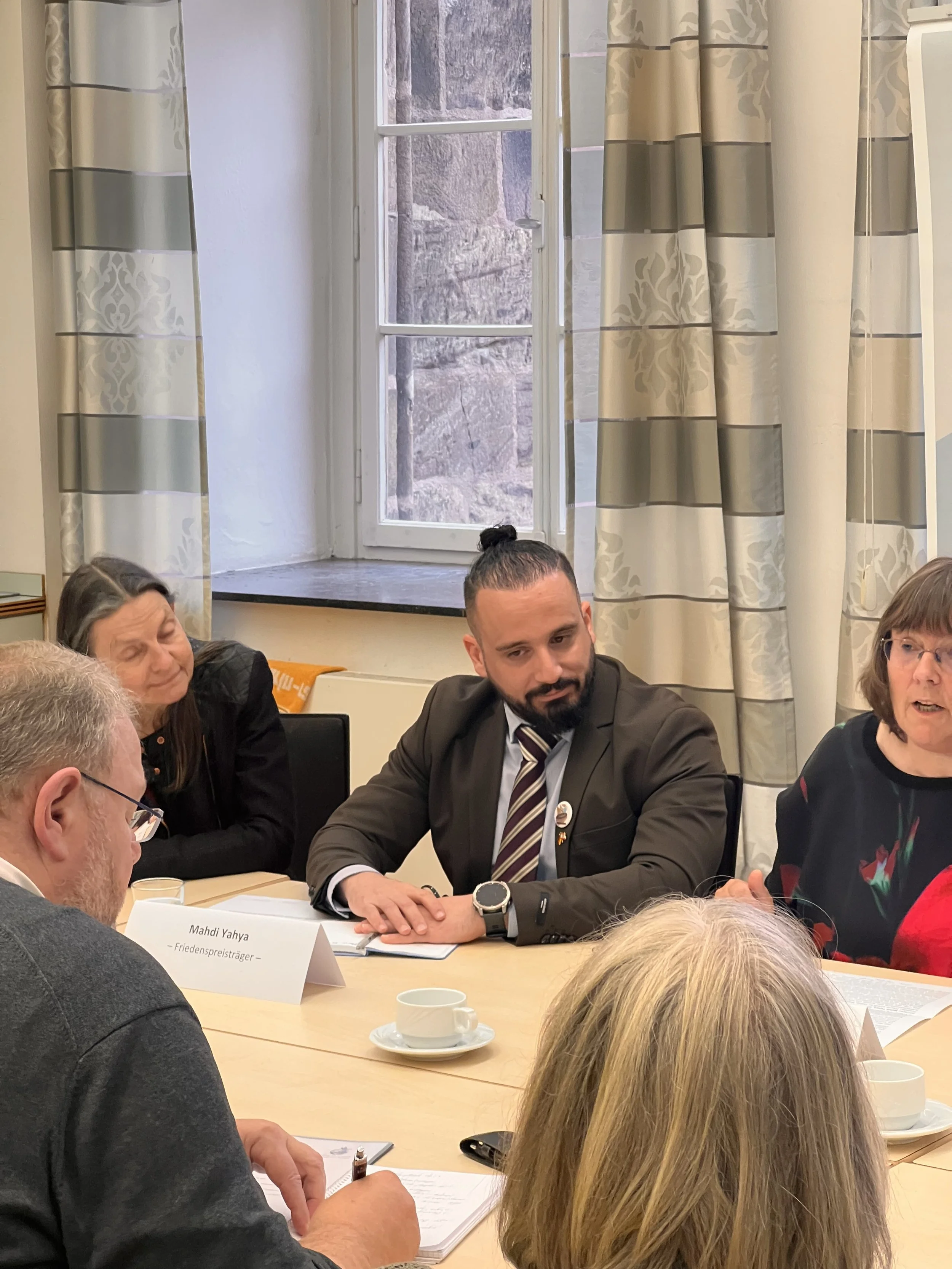
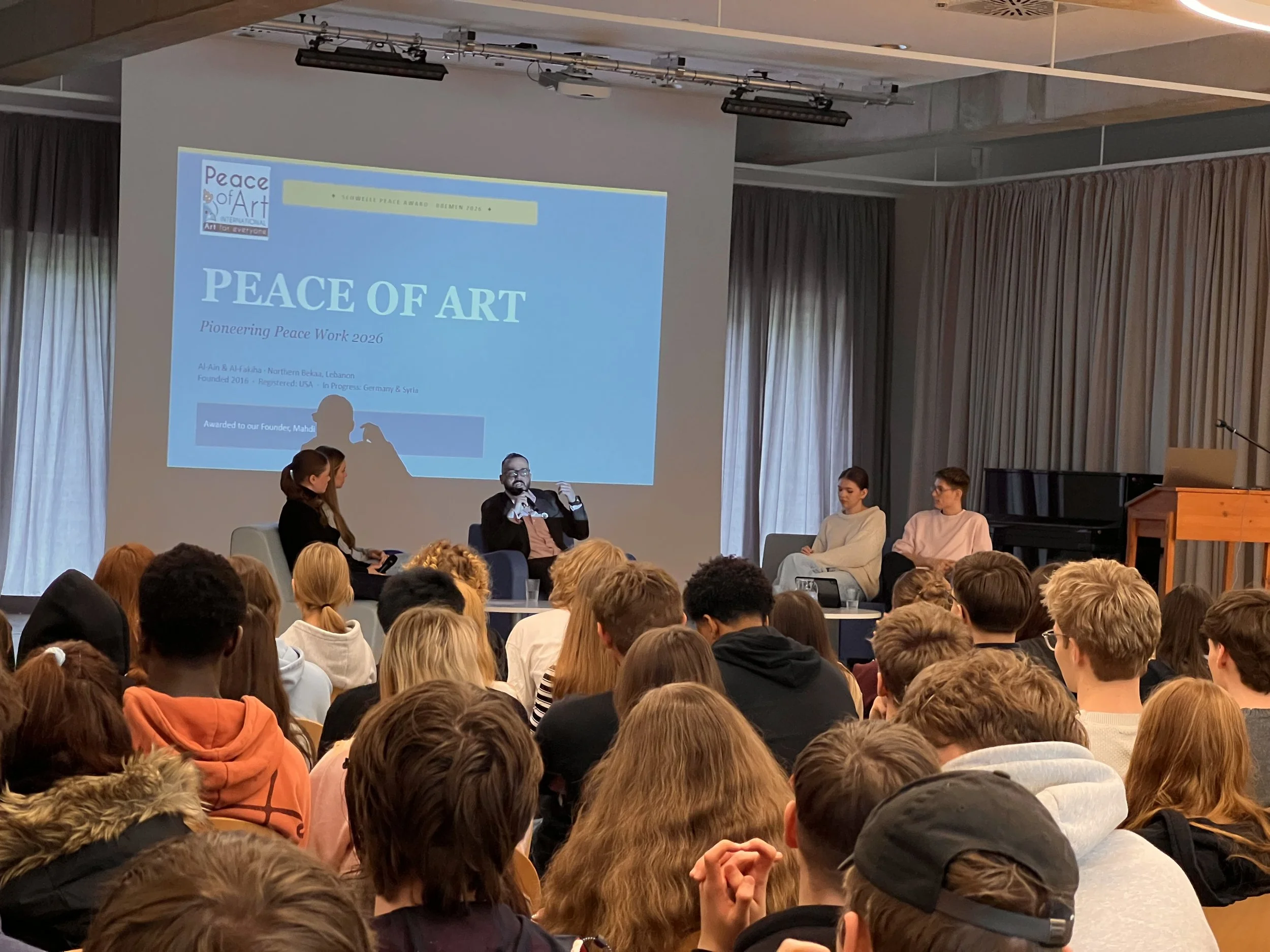
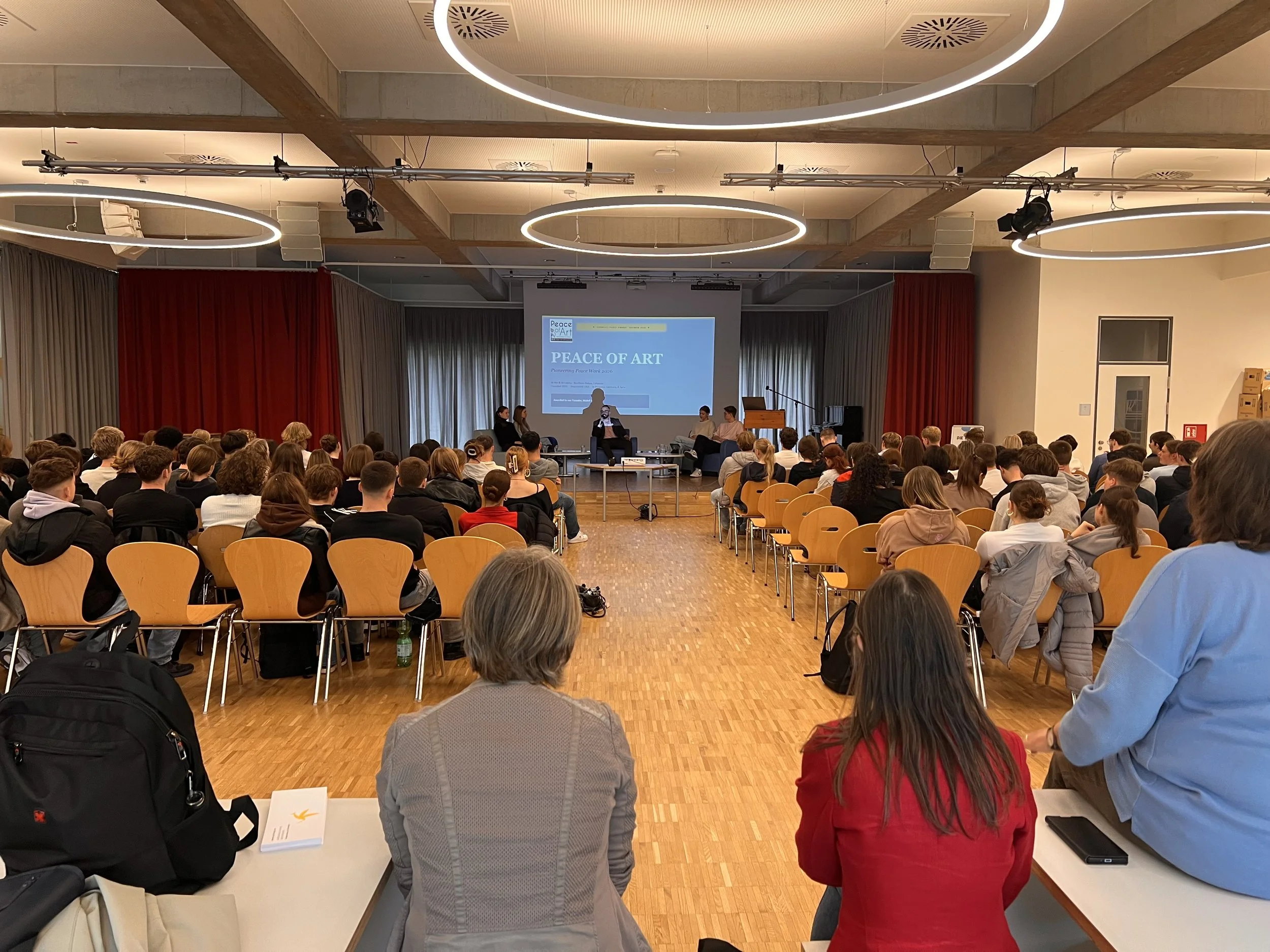
On the morning of 5 May 2026, the official program began with our first school visit in Bremen. A podium discussion had been carefully prepared by the students, under the guidance of teacher and politician Tim Jentzen. Participating in the discussion were Lena Miftari, Tamino Witczak, Luna Frankenberg, and Sophie Rutke.
From the very beginning, I was impressed by the quality of the discussion. These were not students asking simple or superficial questions. They were genuinely engaged with the world around them and wanted to understand how democracy, peace, and civic responsibility can be protected in challenging times.
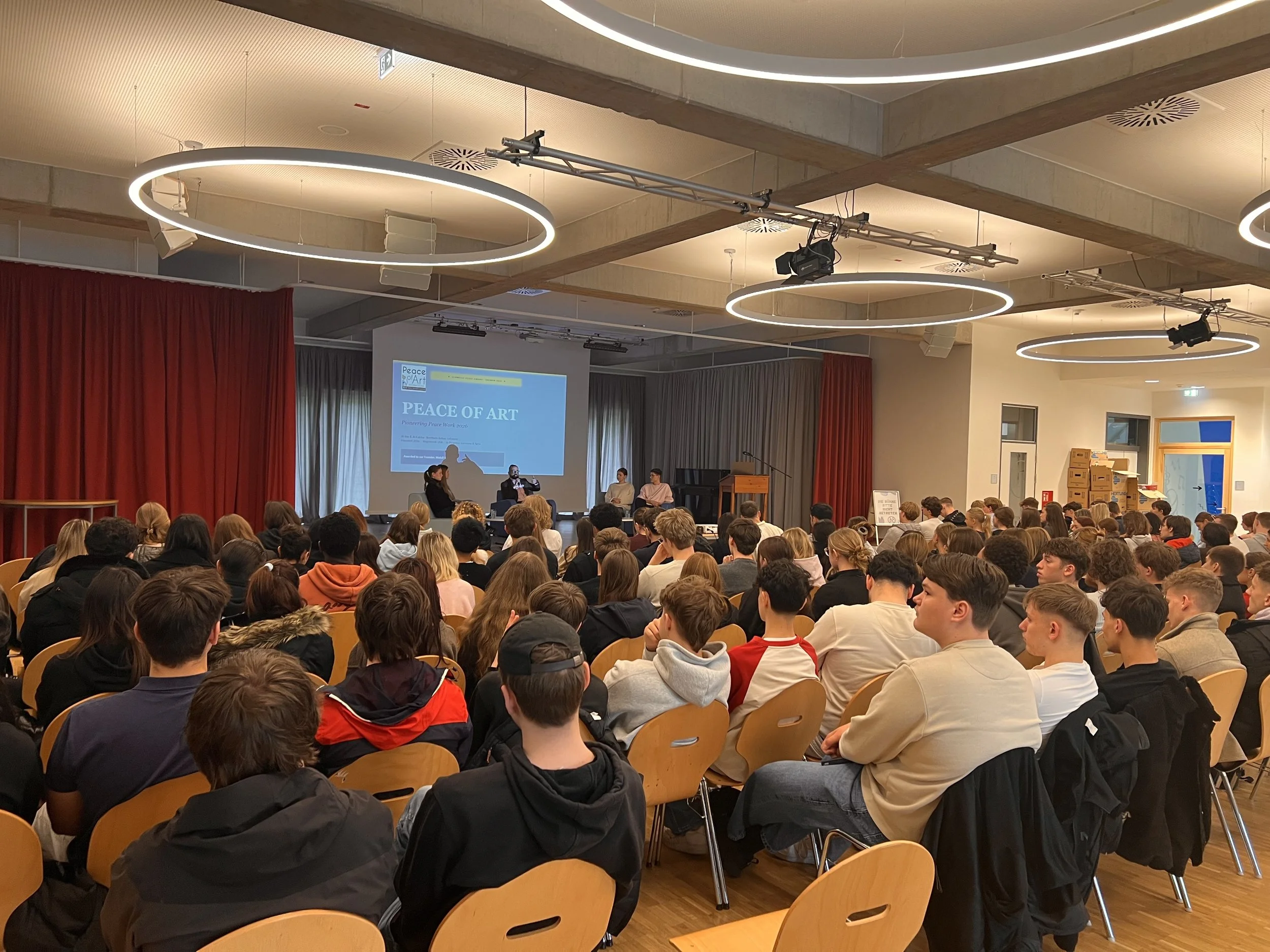
Mahdi Yahya addressing the audience from the podium, sharing a vision of peace, culture, and international cooperation.
Many of the questions focused on me and Peacee of Art as well as democracy and the role of citizens in defending it. Others touched on growing concerns among young people regarding security, military service, and the possibility of future conflicts in Europe. Listening to them, I realized that although many of these students had grown up in peace, they were increasingly aware that peace should never be taken for granted.
One student who particularly stood out during the discussion was Sophie Rutke. Her questions were thoughtful, precise, and well-structured, reflecting a genuine interest in politics and international affairs. Later, I learned that Sophie follows a journalism-focused academic profile at Oberschule an der Lerchenstraße, with advanced studies in Politics and English. She had also participated in the nationally recognized “Jugend debattiert” competition and successfully advanced to the national qualification round in Berlin.
This background became immediately visible during the discussion. Sophie demonstrated a remarkable ability to formulate complex questions, listen carefully, and engage critically with the answers. Her contribution reminded me how important debate, dialogue, and critical thinking are for democratic societies. Seeing young people develop these skills gave me hope for the future.
The conversation moved naturally between local concerns and global realities. As someone coming from Lebanon, a country that has experienced repeated conflicts and crises, I found the exchange especially meaningful. The students wanted to understand not only what happens in conflict zones but also what can be done to prevent societies from reaching that point.
What touched me most was their curiosity. They were not asking questions because they already had answers. They were asking because they genuinely wanted to learn.
In many ways, I left the discussion feeling that I had learned as much from them as they had learned from me.

A Moment of Gratitude and Hope
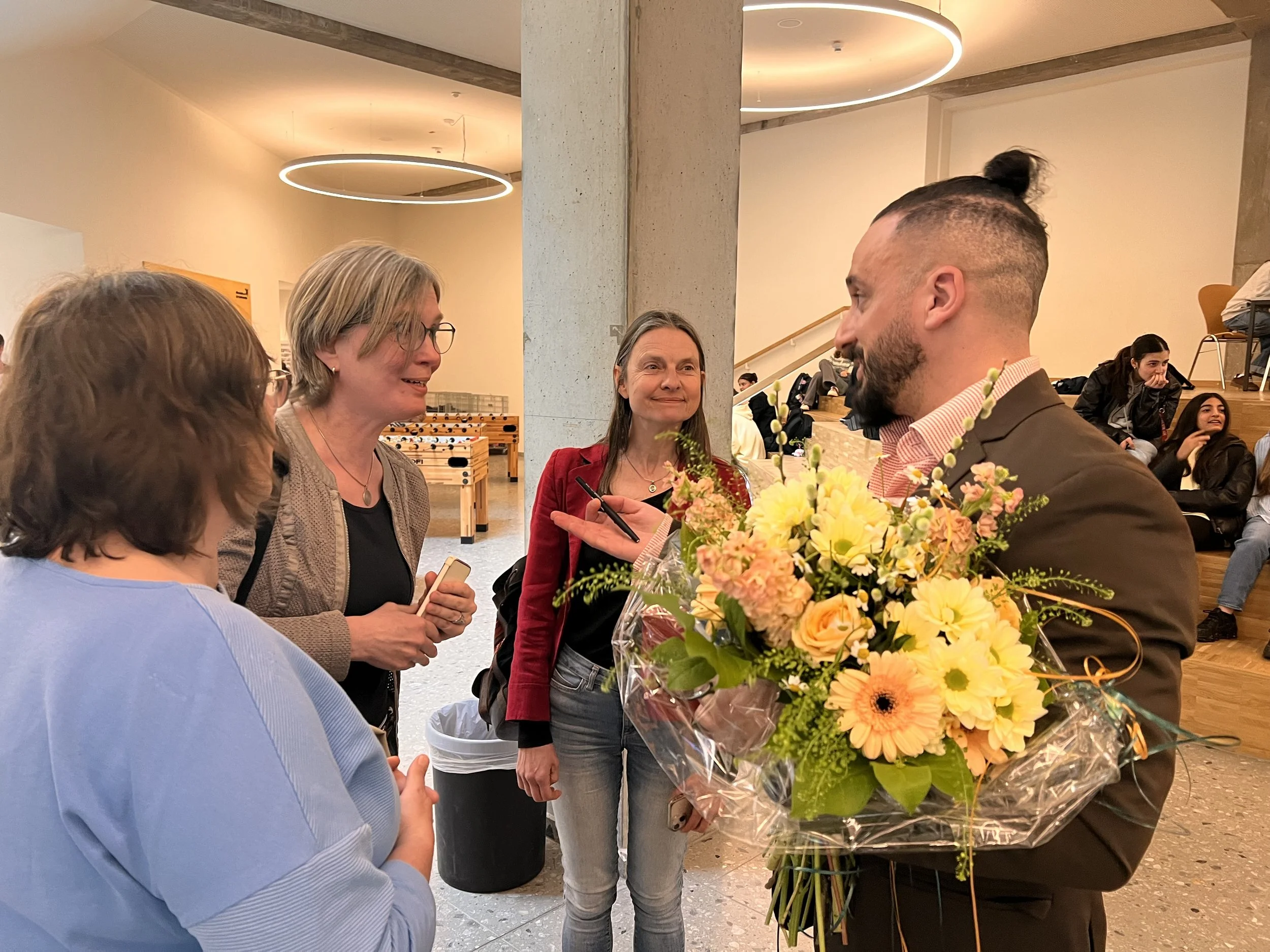
Mahdi Yahya stands with a bouquet of flowers presented by students and school administrators after the podium discussion on democracy, peace, and responsibility. The moment reflects appreciation, community engagement, and optimism for the next generation.
At the end of the podium discussion, the students and the school administration surprised me with a beautiful bouquet of flowers. It was a simple gesture, but one that carried a deep meaning. Standing there, receiving flowers from young people who had spent the morning discussing democracy, peace, and responsibility, I felt optimistic about the future.
A Walk Through Bremen’s History, Industry, and Maritime Soul
After the school visit, we continued our journey through Bremen. Together with Anette Klasing, Petra Titze, and Beate Löwe-Navarro, we walked through the city toward our next destination.
The walk itself became an experience.
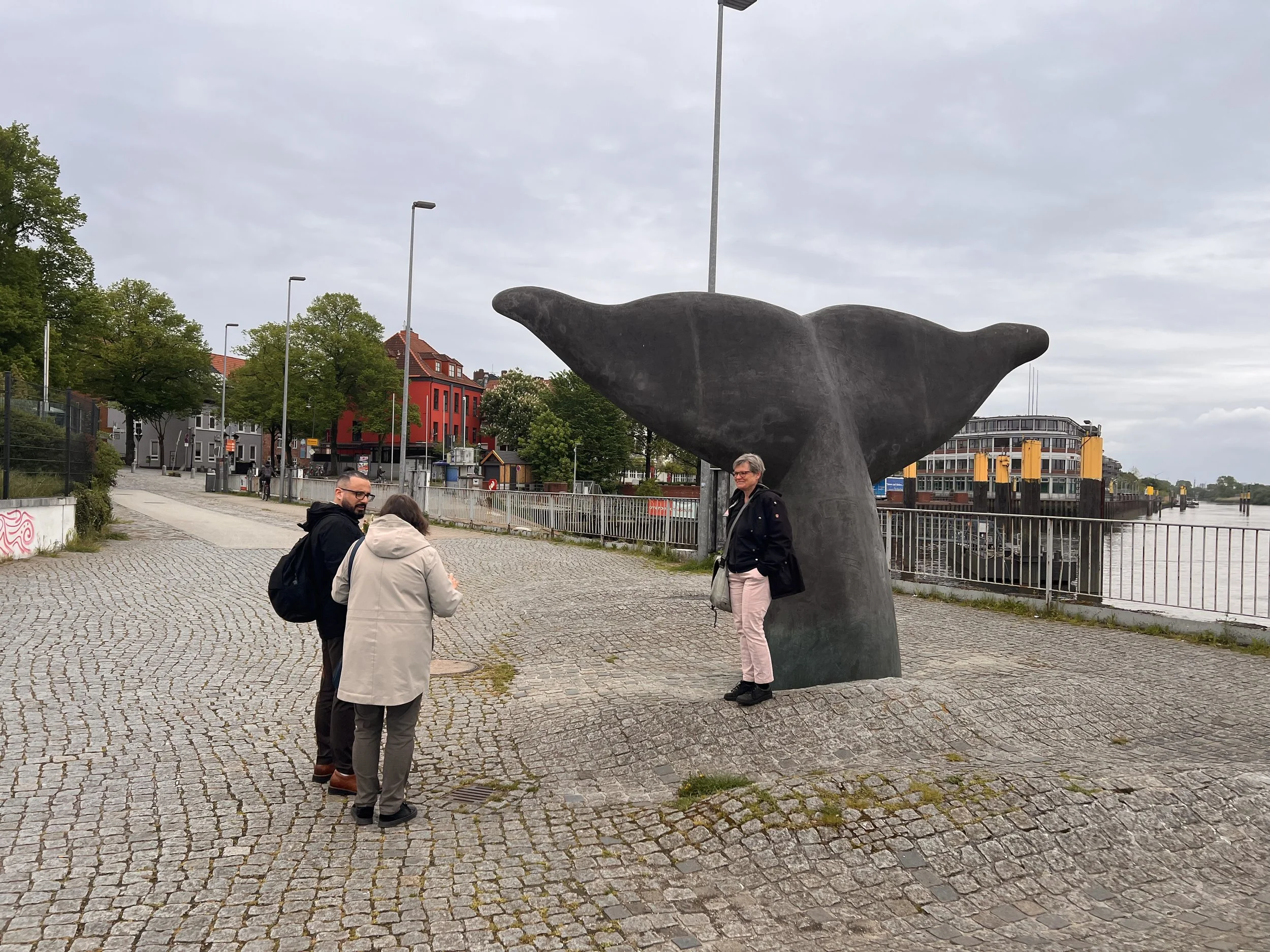
Petra, Anette, and Mahdi standing together next to the Whale Tail statue beside a river. The waterfront setting creates a calm and scenic backdrop, highlighting a moment of friendship and togetherness.
As we followed the Weser River, they shared stories about Bremen’s history as a trading city connected to the sea. They explained how ships, commerce, and international exchange had shaped the city for centuries. Everywhere we walked, there were reminders of Bremen’s maritime identity.
One of the most memorable sights was the series of whale-tail sculptures along the riverfront. A little later, we encountered enormous whale jaw bones that immediately caught my attention. Standing beneath them, I found myself reflecting on how small human beings are compared to many creatures in nature.
Yet despite our size, we have become capable of causing enormous destruction.
Looking at those giant bones, I thought about how humans can hunt a whale in the middle of the ocean and bring it thousands of kilometres away. The sight left me with mixed emotions: admiration for nature, but also a reminder of our responsibility toward it.
Along the river, we also saw impressive luxury yachts. Anette explained Bremen’s long tradition of shipbuilding and spoke about companies such as Lürssen, known internationally for building some of the world’s most sophisticated yachts and naval vessels. She mentioned that one of the yachts we saw could very well belong to a wealthy owner from the Gulf region.
During the walk, Beate also explained the tidal movement of the Weser River. Influenced by the North Sea, the water level rises and falls throughout the day. We even passed one of the large flood protection structures built to protect the city from high water levels. I found it fascinating how Bremen had learned to coexist with nature and adapt to its challenges over centuries.

Exploring History Beneath the Whale’s Legacy
Mahdi, Beate, Anette, and Petra stand beneath the impressive whale jawbone monument in the city, taking time to read the information plaque below. The moment reflects a shared curiosity about local history, maritime heritage, and the stories that connect communities to their past. Surrounded by this remarkable landmark, they pause to learn, reflect, and appreciate the cultural significance of the site.
By the time we reached our next destination, I had already learned a great deal—not only about Bremen’s history and economy, but also about the pride its people take in their city.
And our next stop would introduce us to another side of Bremen entirely: its commitment to culture, education, and the transformative power of art.
Where Art Welcomes Everyone
Our next destination was one of the places I had been particularly looking forward to visiting: KITO and the Overbeck Museum in Bremen-Vegesack.
As we arrived, we were warmly welcomed by the museum’s director Ms Katja Pourshirazi, who personally guided us through the building and introduced us to its history, mission, and unique approach to cultural education. From the very beginning, it became clear that this was much more than a traditional museum.
What immediately impressed me was the atmosphere. The space felt open, inviting, and alive. Rather than presenting art as something reserved for experts, the museum actively encourages visitors of all ages to engage with it.
As we moved through the different floors, the director explained the history of the institution and its connection to Bremen’s cultural life. We discussed the museum’s educational programs and the importance of introducing children and young people to art at an early age. As someone who has dedicated many years to using art as a tool for peacebuilding, this immediately resonated with me.
One of the most inspiring aspects of the visit was seeing the workshop spaces designed specifically for children and students. These rooms allow young visitors not only to observe art but also to create it themselves. I strongly believe that creativity should be experienced, not only admired, and it was encouraging to see this philosophy reflected so clearly.
Another detail that caught my attention was the museum’s commitment to accessibility. Katja showed us exhibits and tools designed to make art more accessible for blind and visually impaired visitors. This thoughtful approach reflected a belief that culture should be available to everyone, regardless of physical limitations.
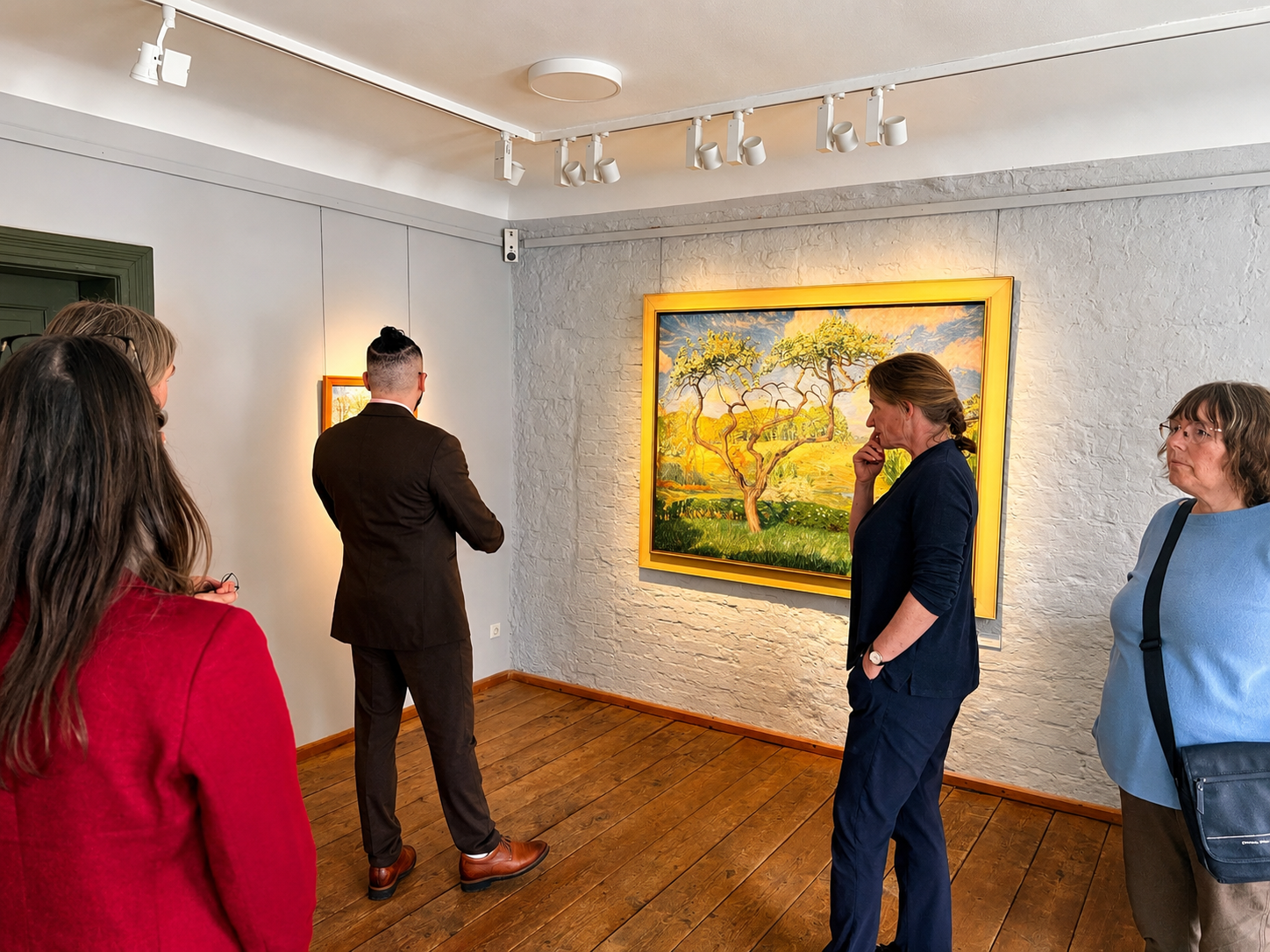
Art, Reflection, and Cultural Dialogue
Mahdi Yahya exploring a collection of artworks that reflect the region’s cultural heritage and artistic traditions.
Among the museum’s more unusual features was a swing positioned in front of an artwork, allowing visitors to sit, move gently, and experience the piece from a different perspective. I found the idea both playful and meaningful. It reminded me that art does not always have to be approached formally. Sometimes it can simply invite curiosity, reflection, and joy.
During our conversation, I had the opportunity to present the work of Peace of Art and explain how we use art, music, theatre, sports, and cultural activities to bring young people together in Lebanon. As we exchanged ideas, I noticed many similarities between our approaches.
Although we operate in very different environments, we share a common belief: art can build confidence, create dialogue, strengthen communities, and open new possibilities for young people.
The visit also gave me the chance to reflect on my own journey. Growing up in North Bekaa, access to cultural institutions such as museums was limited. Seeing a place where children could freely discover creativity, ask questions, and experiment with ideas reminded me why cultural education is so important.
Before leaving, I felt a genuine sense of connection with the museum and its team. Different countries, different contexts, and different histories—but a shared conviction that art has the power to bring people closer together.
As we left KITO and the Overbeck Museum, I carried with me not only admiration for the institution itself, but also inspiration. It was another reminder that peacebuilding takes many forms, and that sometimes it begins with something as simple as helping a child discover the joy of creativity.
From there, our journey continued, and once again our hosts had planned another opportunity for dialogue, exchange, and discovery—this time around a table filled with food, stories, and new friendships.
Conversations Across Cultures
After our visit to KITO and the Overbeck Museum, Stiftung die schwelle invited Vera and me to a cosy Turkish restaurant in the city. Once again, I was touched by the generosity and hospitality of our hosts. Throughout the week, they constantly paid attention to the smallest details, always making sure we felt comfortable and welcomed.
The food was excellent, and the atmosphere relaxed. It also gave us the opportunity to continue conversations that had started earlier in the day. By this point, I was beginning to understand that one of Bremen’s greatest strengths is its openness to different cultures and perspectives.
Following lunch, we continued walking through the city. Along the way, Anette Klasing, Petra Titze, and Beate Löwe-Navarro shared more stories about Bremen’s history, current projects, and the many initiatives taking place throughout the city. Every street seemed to carry a story, and every conversation revealed another layer of Bremen’s identity.
Eventually, we arrived at our next destination: Leben in Nord e.V.
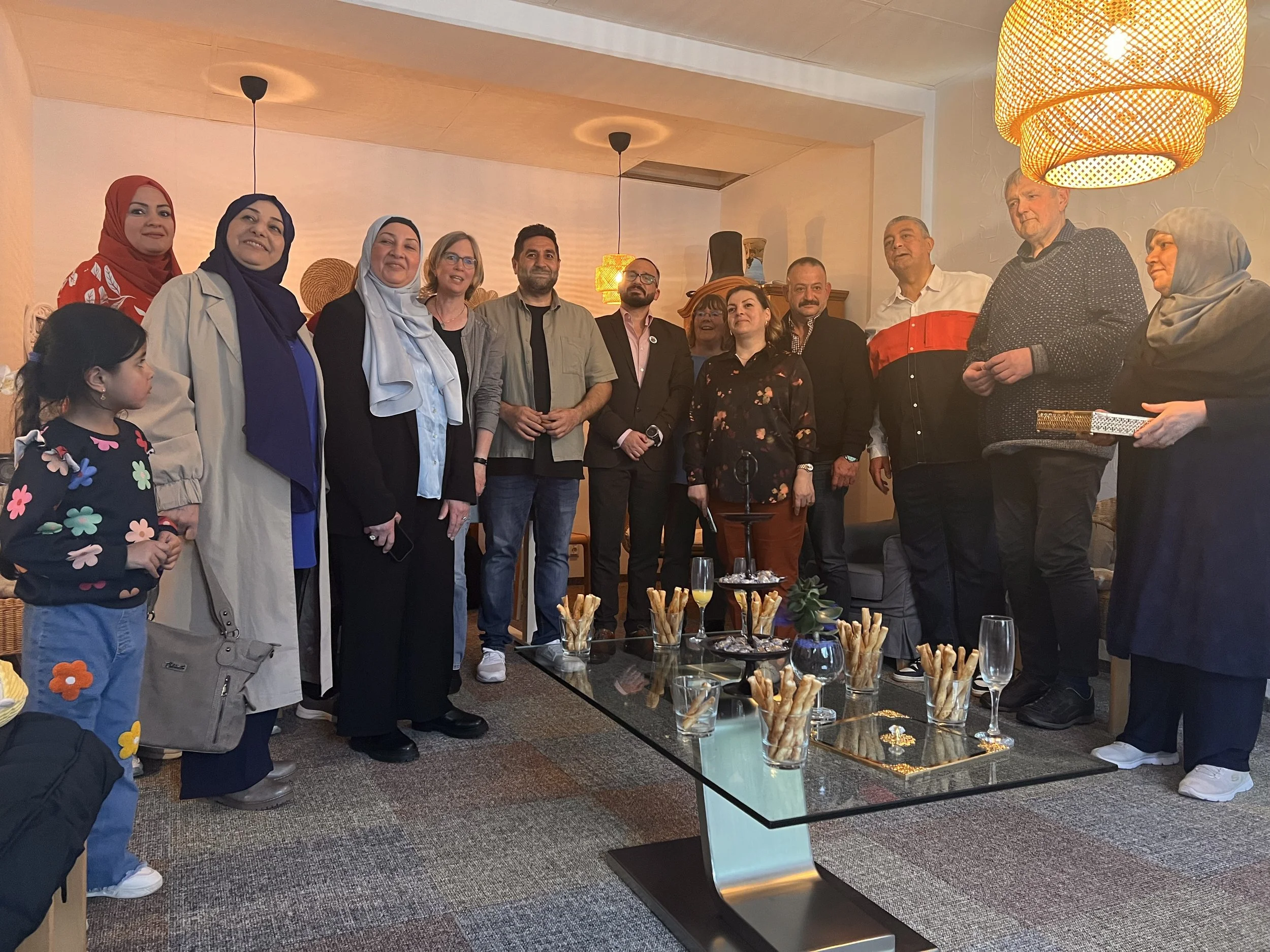
Waiting for us there was a diverse group of members of Bremen’s Arab community. The gathering had been organized as an opportunity for exchange, dialogue, and mutual learning. What immediately impressed me was the genuine interest people showed in discussing how they could contribute positively to their city and society.
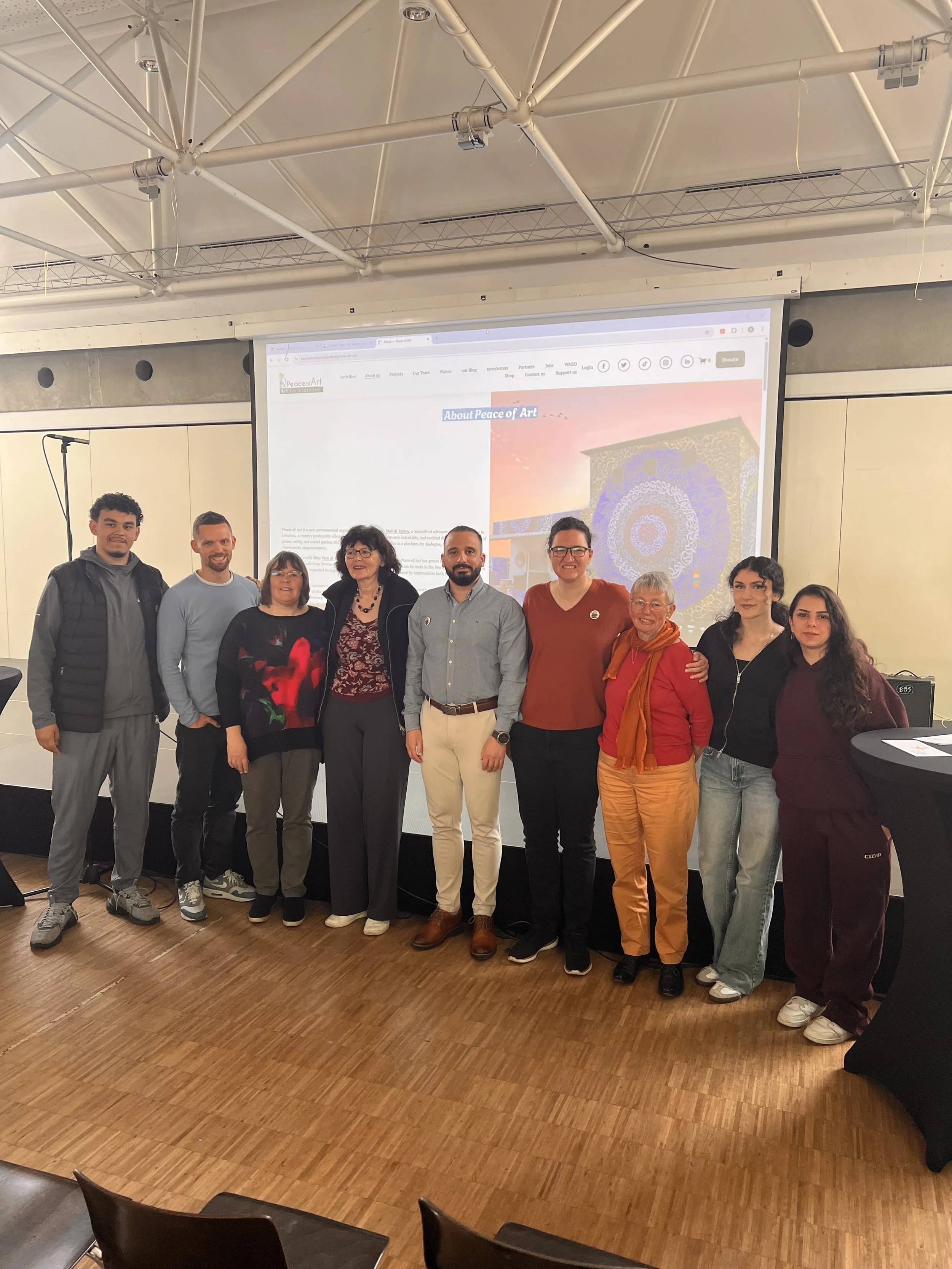
The event began with a screening of a video presenting the work of Peace of Art in Lebanon. Through the video, participants were introduced to our projects, our vision, and our efforts to use art, culture, education, and dialogue as tools for peacebuilding.
The discussion that followed was one of the most engaging conversations of the week.
Many participants shared their experiences as members of the Arab diaspora in Germany. They spoke about integration, identity, belonging, and the desire to play an active role in Bremen’s social and cultural life. I was particularly encouraged by the positive energy in the room. Rather than focusing only on challenges, many participants were looking for ways to contribute, connect, and build bridges between communities.

Promoting Understanding Through Community Dialogue
Mahdi Yahya addresses participants during a gathering at Leben in Nord e.V., speaking about the importance of intercultural understanding, civic engagement, and building stronger communities through dialogue. The event brought together people from diverse backgrounds to exchange perspectives, strengthen connections, and explore shared values of respect, participation, and peaceful coexistence. The discussion reflected the article’s focus on creating meaningful spaces where communities can learn from one another and work together for a more inclusive future.
One moment that stood out for me involved Jenny Kauther. Before arriving in Bremen, I would not have expected to meet a German pastor who could communicate in Arabic. Jenny explained how her work with Syrian refugee families had led her to learn the language and deepen her understanding of Arab culture.
She spoke about welcoming refugee families through her church and learning directly from the people she accompanied. Listening to her, I was reminded that intercultural dialogue is not built through theories alone. It is built through human relationships, openness, and the willingness to learn from one another.
For me, Jenny’s story represented something beautiful: a pastor from Germany learning Arabic through her relationships with Syrian families, while I, coming from Lebanon, was sitting in Bremen discussing peacebuilding with people from different cultures, religions, and backgrounds. It was a living example of the kind of world many of us are working to create.
As the discussions continued, I found myself increasingly impressed by the people of Stiftung die schwelle. Throughout the week, they seemed to be everywhere at once—organizing, welcoming guests, facilitating conversations, solving problems, and creating opportunities for meaningful encounters.
They reminded me of bees working tirelessly for a common purpose.
Every person contributed in their own way.
Every person brought energy, commitment, and a sincere desire to make a positive difference.
By the end of the evening, I left Leben in Nord e.V. feeling inspired. The conversations had reinforced something I have learned repeatedly throughout my work: meaningful peacebuilding does not happen only in conference halls or official institutions.
It happens when people sit together, share their stories, listen to one another, and discover that they have more in common than they initially imagined.
As we returned to the hotel that evening, I reflected on how much I had already learned in just two days. Yet many of the experiences that would leave the strongest impression on me were still ahead.
The following morning, Bremen would reveal another side of itself—through a city tour led by one of the people who knows and loves it best.
Discovering Bremen Through the Eyes of Its People
The morning of 6 May 2026 began with a special surprise.
Anette Klasing’s husband picked Vera and me up and offered to show us Bremen from a local perspective. What followed was far more than a city tour. It was an introduction to the history, character, and spirit of Bremen by someone who clearly loved every corner of his city.
From the very beginning, I was impressed by his knowledge. Whether we were passing a historical building, a former military site, a modern industrial area, or a small street corner, he always had a story to tell. He spoke with precision and passion, not as a tour guide following a script, but as someone genuinely connected to the city and proud of its heritage.
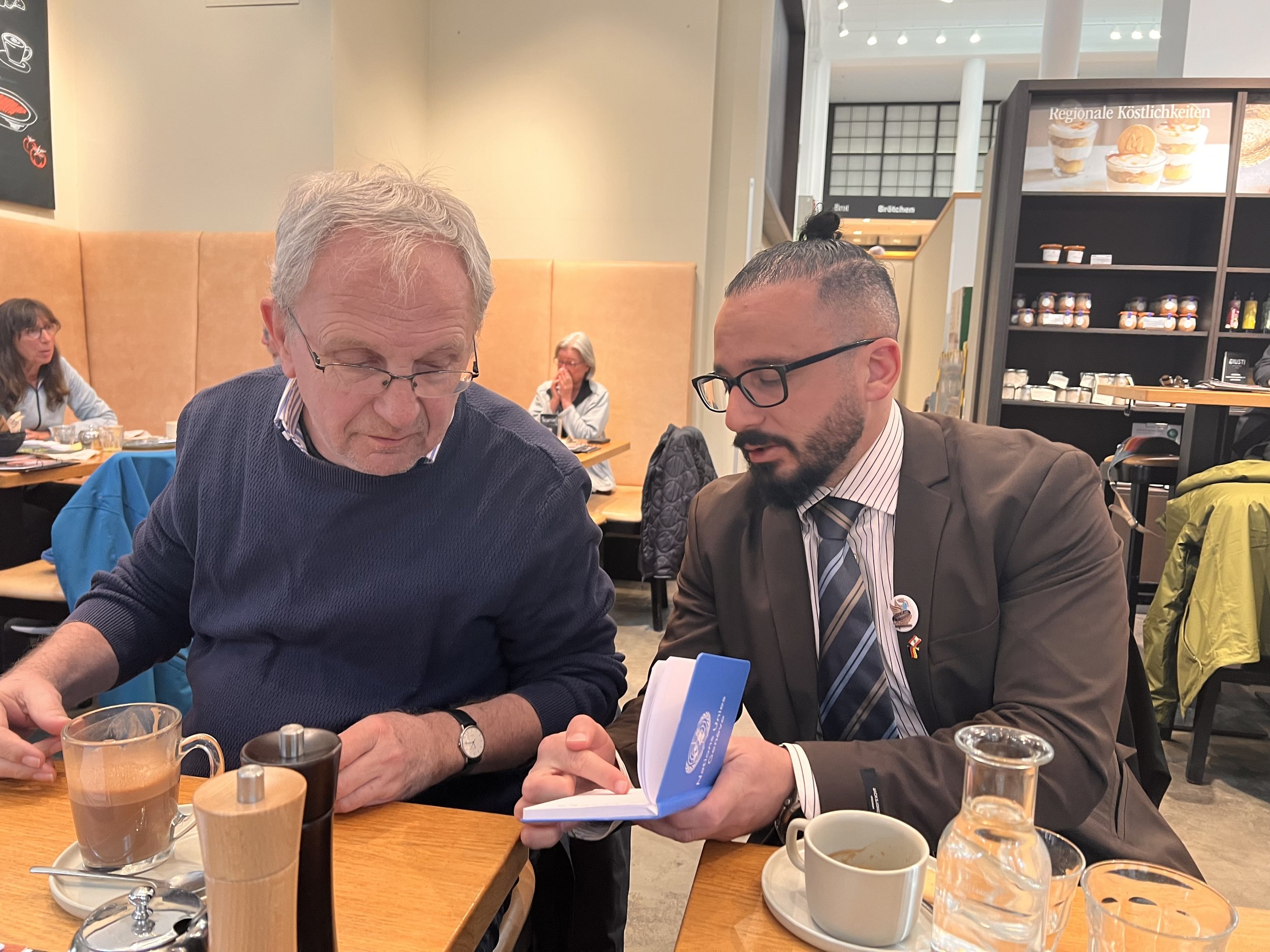
Meaningful Conversations Over Coffee
Mahdi Yahya and Anette’s husband share a coffee while engaging in a thoughtful and wide-ranging conversation. Beyond the formal meetings and events, moments like these provided an opportunity to exchange personal experiences, discuss community issues, and reflect on shared values. The relaxed setting underscored the importance of dialogue and friendship in building lasting relationships across cultures and backgrounds.
We visited parts of Bremen’s old fortifications and learned how the city’s defensive walls had gradually been transformed into green spaces and parks. What once protected the city from attack now provides residents with places for relaxation and recreation. I found this transformation symbolic in a way—turning structures built for conflict into places that bring people together.
We also passed old bunkers and discussed their history. As someone coming from Lebanon, where memories of conflict remain visible in many places, I always find such sites thought-provoking. They remind us how fragile peace can be and how important it is to protect it.
The tour also highlighted Bremen’s modern identity. We discussed major employers and innovators in the region, including Airbus and ArianeGroup. Hearing how Bremen contributes not only to maritime industries but also to aviation, aerospace, and European space programs reinforced my impression of a city that continuously reinvents itself while remaining connected to its history.
Later, we met Anette and continued our walk through the city centre over coffee.
This part of the day became one of the most enriching experiences of my stay.
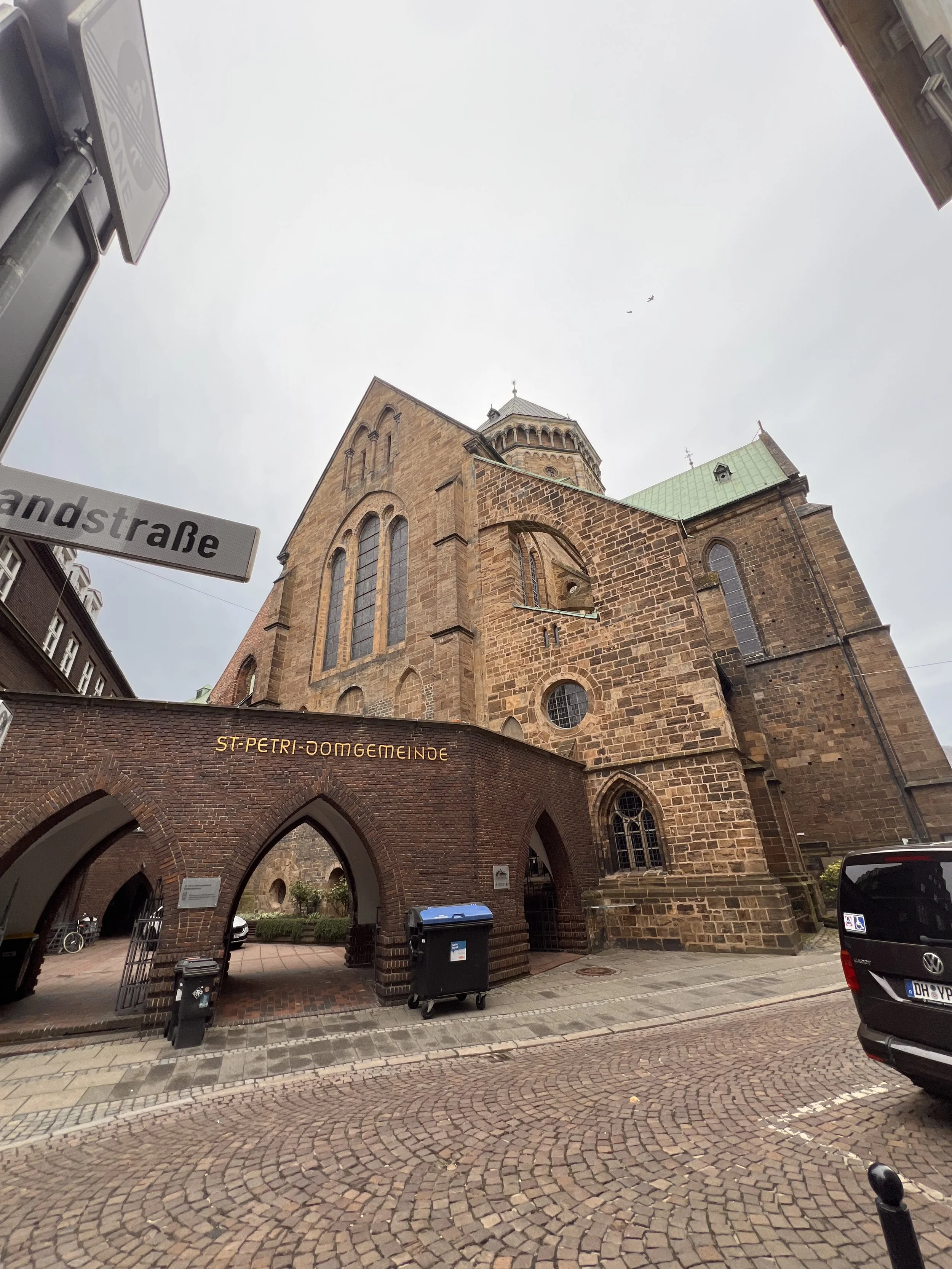
Discovering Bremen’s Spiritual and Historical Heritage
St. Petri Domgemeinde, one of Bremen’s most significant religious and historical landmarks.
Walking through Bremen with Anette felt like walking through a living archive. Every building, square, and monument seemed connected to a story she knew by heart. Her deep knowledge of the city reflected decades of engagement, curiosity, and commitment—not only to Bremen itself but also to people and communities around the world.
We visited the historic heart of the city, including Bremen Cathedral and the magnificent Rathaus. Anette explained how much of Bremen had suffered during the Second World War, while the Rathaus remained standing and today forms part of Bremen’s UNESCO World Heritage Site.
Standing in front of the building where I would later receive the Bremen Peace Award, I could not help but pause for a moment. Its architecture, history, and symbolism already felt impressive from the outside. Little did I know how much more extraordinary it would seem from within.
As we continued through the old town, I noticed something that appeared almost everywhere: the famous Bremen Town Musicians.
Whether as statues, souvenirs, decorations, or symbols, the donkey, dog, cat, and rooster were present throughout the city. Anette explained the story behind the famous Brothers Grimm tale and how the animals had become one of Bremen’s most beloved symbols.
The story itself carries a beautiful message. Four animals, each considered too old or no longer useful, join forces and discover strength through cooperation. It is a story about solidarity, courage, and finding value where others may not see it.
Perhaps that is one reason why I immediately liked it.
Before continuing our program, we took the opportunity to buy a few souvenirs for our families, friends, and members of the Peace of Art team back in Lebanon. It felt important to bring a small piece of Bremen home with me.
What made this day particularly memorable, however, was not only what I learned about the city.
It was the people guiding me through it.
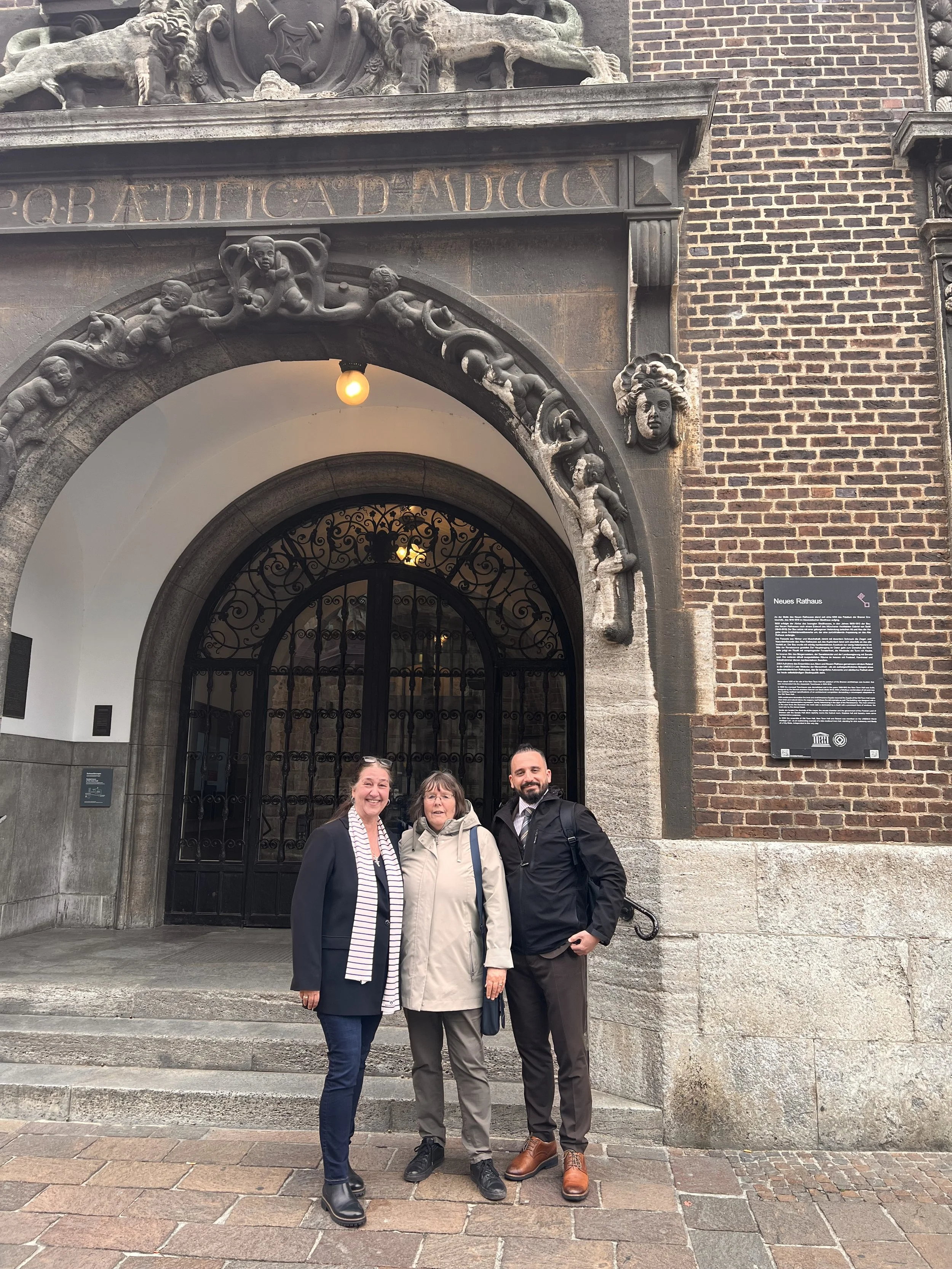
In Front of Bremen Rathaus: Celebrating Civic Leadership and Partnership
Mahdi Yahya stands with Anette and a member of the Bremen Rathaus management team in front of the historic City Hall. Set against one of Germany’s most renowned symbols of municipal governance.
The more time I spent with Anette, the more I understood why she is so respected in peacebuilding and civil society circles. For decades, she has worked to connect people across cultures, religions, and borders. Her work has taken her to many parts of the world, including Lebanon and Palestine, always with the goal of building understanding and human connection.
For me, getting to know her personally was one of the greatest privileges of this journey.
She combines experience with humility, knowledge with curiosity, and leadership with genuine humanity. For anyone working in peacebuilding, human rights, or intercultural dialogue, she represents a remarkable example of lifelong commitment to these values.
As the morning came to an end, our next destination awaited us: the Volkshochschule, where new conversations, new encounters, and—as I would soon discover—Germany’s famous Spargel season would become part of the story.
New Encounters, Shared Values, and the Spargel Season
Our next stop was the Volkshochschule Bremen, one of Germany’s well-known institutions for adult education and lifelong learning. It was another place where dialogue, education, and civic engagement come together—values that closely resonate with the mission of Peace of Art.
There, we met several members of the team, including Ivesa, who would later play an important role during the award ceremony by translating my speech to the audience.
Ivesa immediately left a strong impression on me. She spoke Arabic fluently, something I had not expected. During our conversation, I learned that she had spent significant time in Arab countries and developed a deep understanding of the language, culture, and region. Beyond her linguistic abilities, what impressed me most was her energy and commitment. She was highly educated, engaged in human rights issues, and genuinely interested in creating connections between people and cultures.
Once again, I found myself reflecting on how many individuals I had met in Bremen who had invested time and effort into understanding cultures beyond their own. It was a recurring theme throughout my visit.
Lunch was served there, and this is where I encountered something that seemed to follow me everywhere in Bremen: Spargel.
It was asparagus season in Germany.
At first, I did not fully understand why Spargel appeared on nearly every menu we encountered. But after a few days, it became impossible not to notice. Restaurants proudly displayed seasonal asparagus dishes, and conversations about Spargel seemed almost as common as conversations about the weather.
Naturally, this became the source of several jokes.
I shared my memories of the first time I had tried asparagus and the surprise many newcomers experience when discovering its rather famous side effect. The topic generated plenty of laughter around the table and became one of those small, light-hearted moments that help build friendships.
What I appreciated most during these gatherings was that they never felt formal or distant. There was always room for humour, curiosity, and genuine human connection.
Later that day, Anette invited Vera and me to visit her home.
For me, this became one of the most personal and inspiring moments of the entire week.
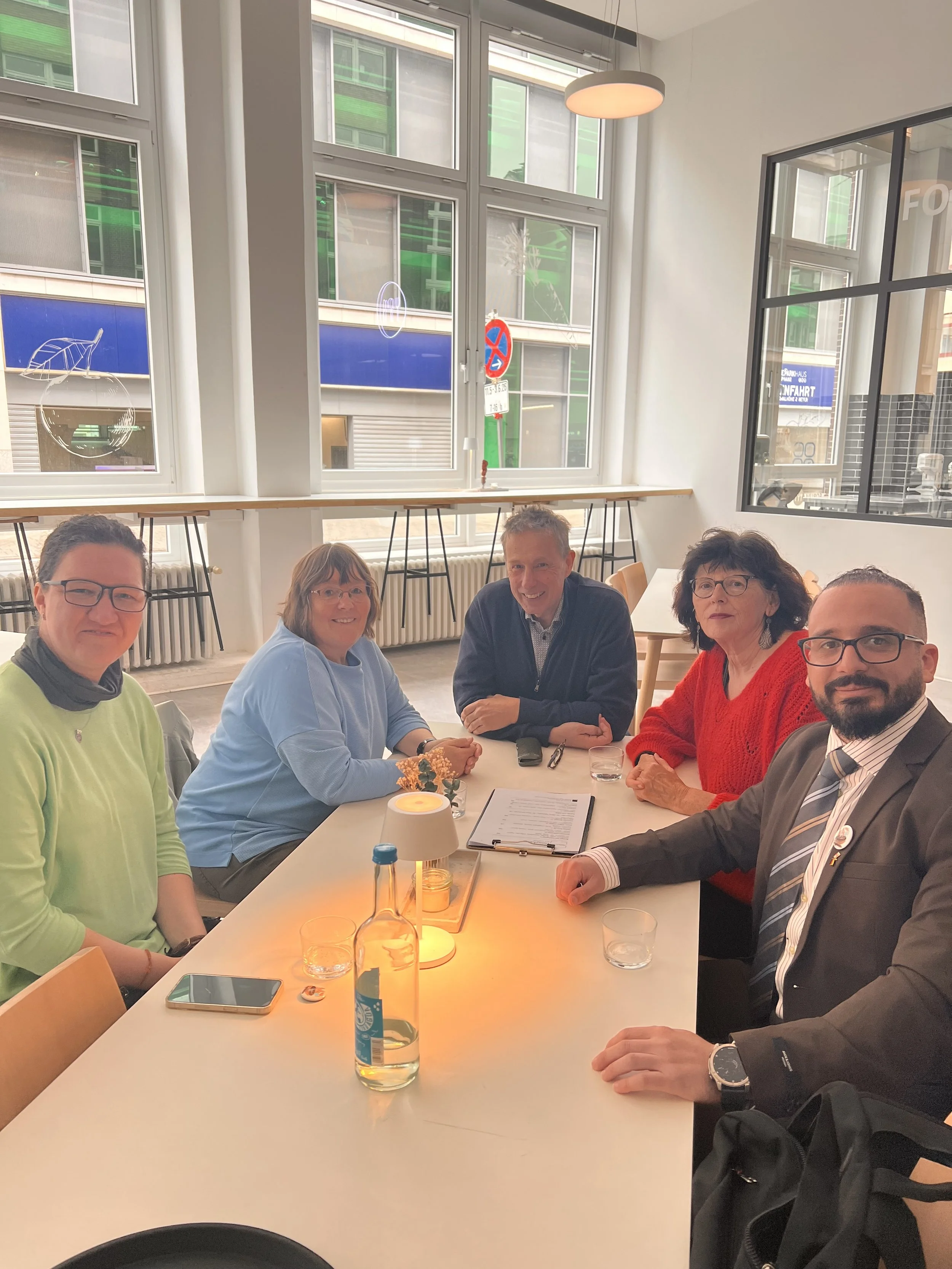
Building Connections at Volkshochschule Bremen
As we entered her house, it quickly became clear that we were stepping into the life story of someone who had dedicated decades to peacebuilding, human rights, and international solidarity.
Photographs, books, documents, and memories reflected years of engagement across Germany, Palestine, Lebanon, and many other places. Every shelf seemed to tell a story.
One particular item immediately caught our attention: a practical workshop guide that Anette had helped develop through her years of work. As she explained its methodology and purpose, Vera and I immediately recognized its value for Peace of Art trainers and facilitators. We were delighted when she offered us a copy.
She also showed us a collection of powerful photographs created by a Palestinian photographer from Gaza, whom she had previously invited to Bremen for an exhibition. The images were beautiful, moving, and deeply human. They showed not only suffering but also dignity, resilience, and everyday life.
Listening to Anette speak about these projects, I gained an even greater appreciation for her life’s work.
Before arriving in Bremen, I knew her as the Chairwoman of Stiftung die schwelle.
After spending time with her, I came to know something much more important: a person who had dedicated a significant part of her life to bringing people together across cultures, religions, and political divides.
For me, she became not only a host, but a role model.
As the afternoon came to an end, we left her home carrying new ideas, new inspiration, and a deeper understanding of the people behind Stiftung die schwelle.
The day, however, was far from over.
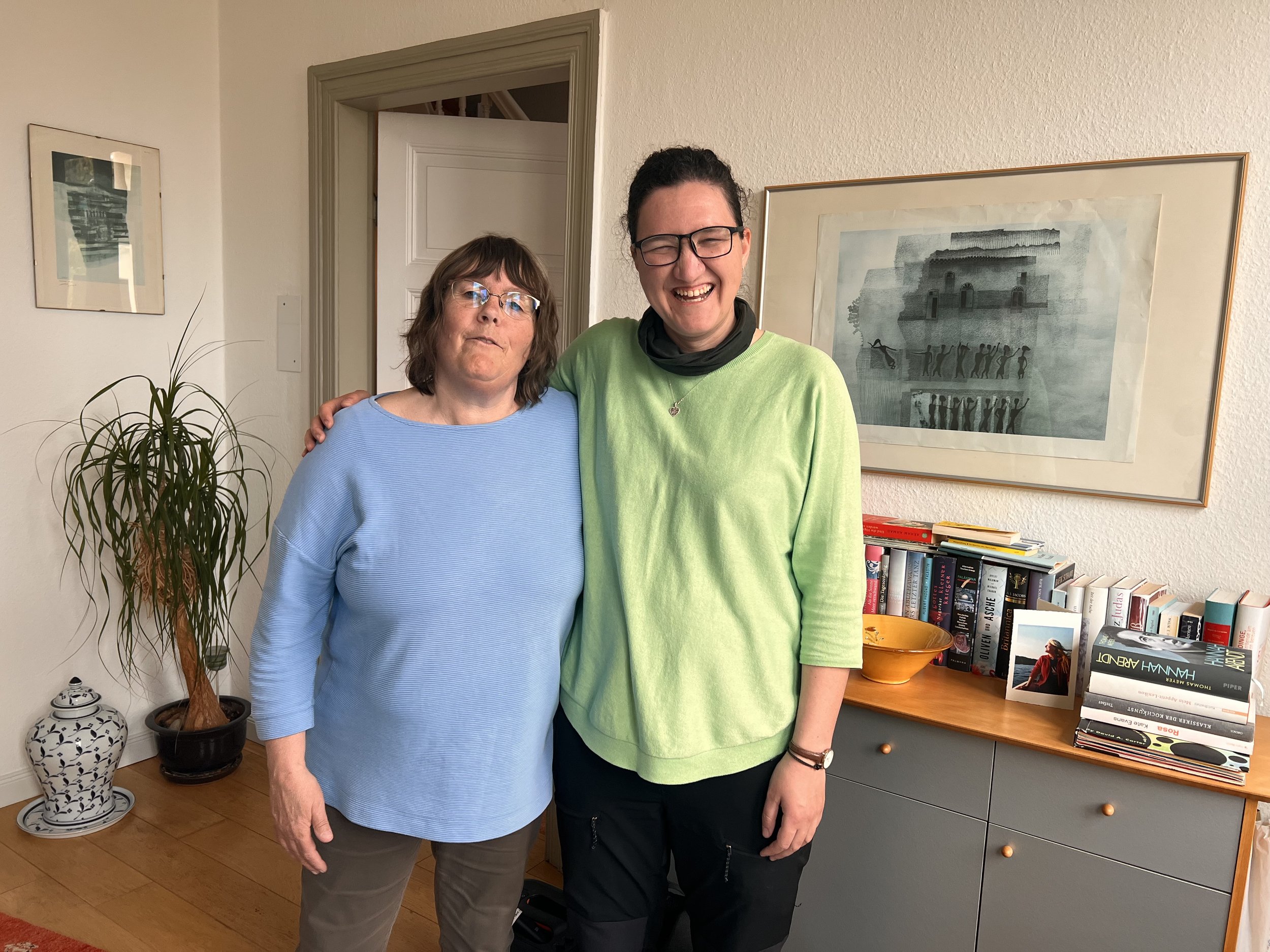
Friendship and Hospitality at Home
Vera and Anette pose together at Anette’s home, sharing a moment of friendship and warmth in a welcoming setting. The photograph reflects the personal connections that often develop beyond formal meetings and public events, highlighting the value of hospitality, mutual respect, and genuine human relationships. Such moments of togetherness help strengthen bonds and create lasting memories rooted in trust and understanding.
Our next destination was Le Keyf, where another community gathering awaited us—one that would bring together conversations about peace, identity, migration, and the role of civil society in building stronger communitie
An Evening of Dialogue at Le Keyf
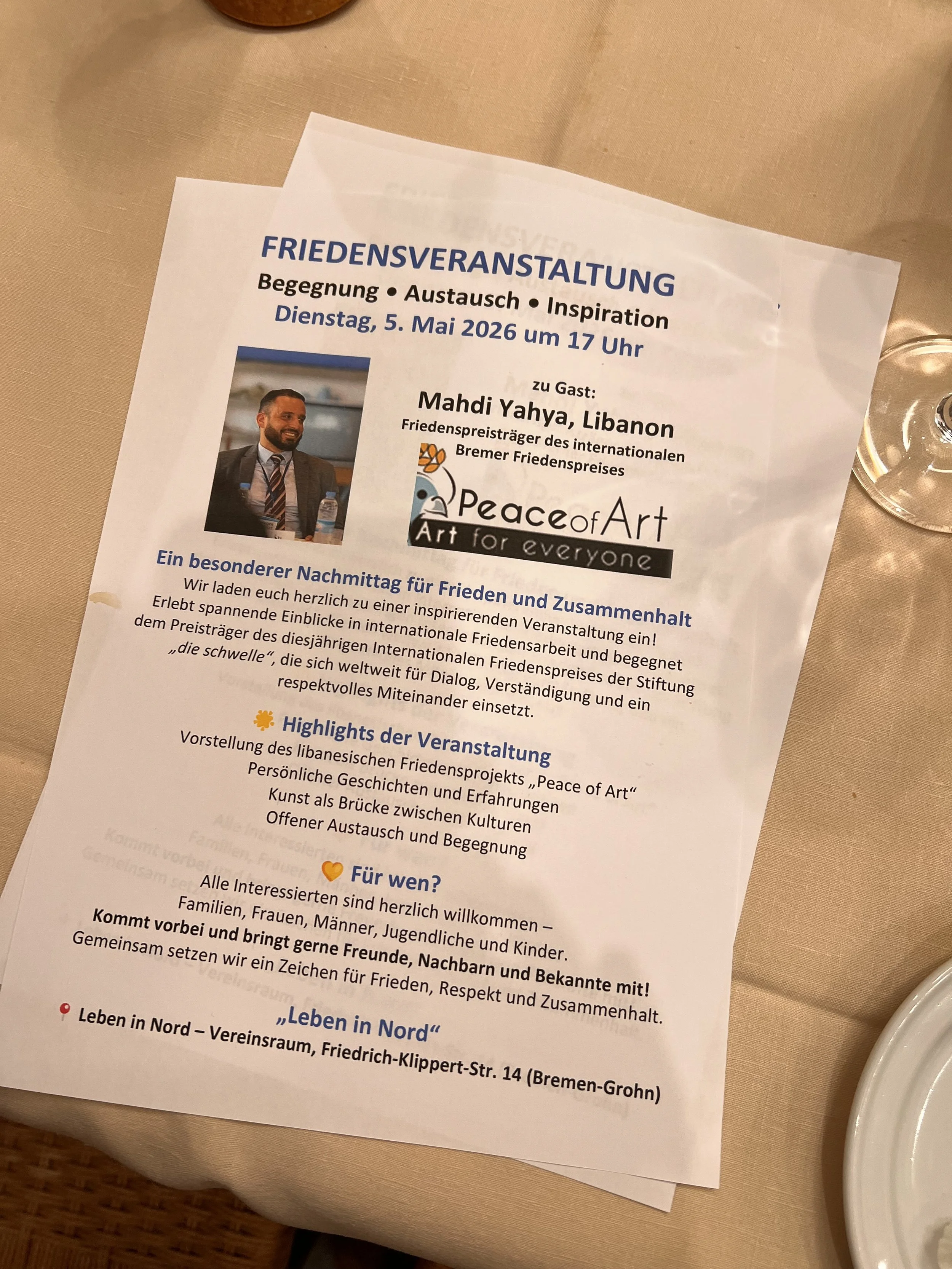
After our visit to Anette’s home, we continued to our next destination: Le Keyf, a Kurdish restaurant in Bremen that was hosting a public dialogue event entitled “Building Peace Under Difficult Conditions” (Friedensarbeit unter schwierigen Bedingungen) on 6 May 2026.
The event had been organized to introduce the work of Peace of Art and to create a space for dialogue around peacebuilding, intercultural exchange, and the challenges of working in regions affected by conflict. Seeing my photo and the Peace of Art logo displayed on the entrance poster was a special moment. Coming from a small village in North Bekaa, I never imagined that one day people in another country would gather to learn about our work and discuss how art can contribute to peace.
Inside, a diverse audience had gathered, eager to learn more about Lebanon, Peace of Art, and the realities of building peace under difficult circumstances. We began by screening a video about our organization, presenting our projects, our mission, and the communities we work with.
What followed was one of the most engaging discussions of the week. Participants asked thoughtful questions about youth empowerment, conflict transformation, intercultural dialogue, and the role of civil society. Many wanted to understand how art can become a practical tool for peacebuilding rather than simply a form of expression.
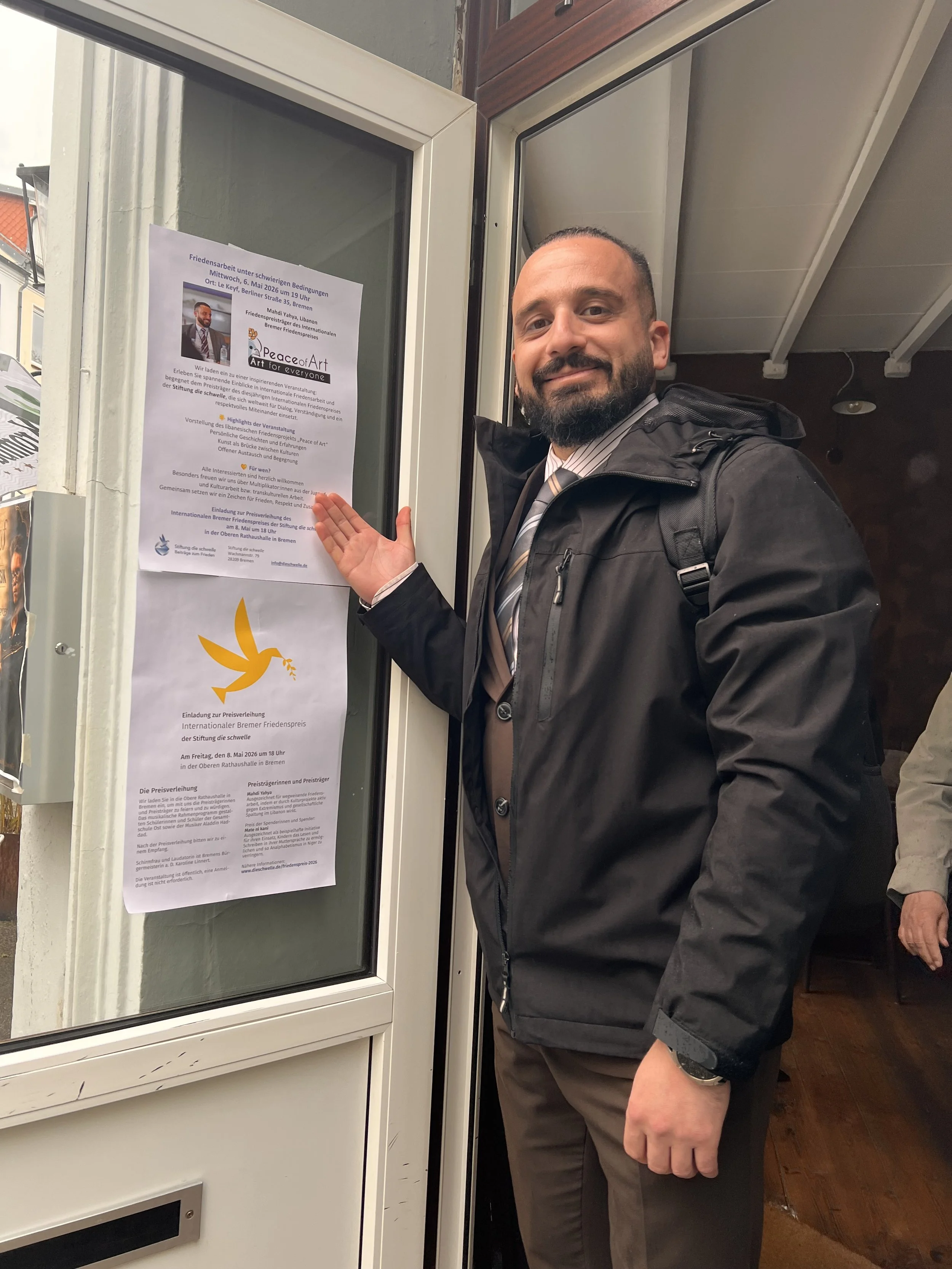
A Moment of Reflection at Le Keyf
Mahdi Yahya stands in front of Le Keyf with his hand resting on the event poster created and organized by Die Schwelle. The poster symbolizes a successful gathering dedicated to dialogue, cultural exchange, and community engagement. Captured at the venue where meaningful conversations took place, the photograph reflects the collaborative efforts of organizers, participants, and partners committed to promoting peace, understanding, and active citizenship. It also serves as a reminder of the power of local initiatives to bring people together around shared values and common goals.
The setting itself made the evening even more memorable. Le Keyf is a Kurdish restaurant, and many aspects of the atmosphere felt familiar. The food, the hospitality, the sounds, and the conversations reminded me of the cultural closeness that exists across the Middle East. Once again, I felt that our hosts were doing everything possible to make Vera and me feel at home.
As dishes were shared around the table and discussions continued late into the evening, the formal event gradually became a gathering of people exchanging stories, experiences, and ideas. Those moments often leave the deepest impression on me. Real dialogue does not happen only from a stage. It happens around tables, over meals, and through genuine curiosity about one another.
Between Recognition and Resistance
The following day, 7 May 2026, began with the official press conference for the International Bremen Peace Award.
The conference took place at the Marienzimmer in Liebfrauenkirchhof, in the heart of Bremen. It was one of those moments when the reality of the award began to feel tangible. Journalists, organizers, and supporters had gathered to introduce the project being recognized by Stiftung die schwelle.
For the first time during the week, I sat beside the other award recipient, Mate ni Kani, who was being recognized for its important work supporting and empowering women and girls affected by violence and exploitation. Although our projects emerged from different contexts, both shared a common goal: protecting human dignity and creating opportunities where they are most needed.
A short recap of key moments from the Bremen Peace Award 2026 week, including the official press conference, community events, cultural visits, and discussions on peace, youth engagement, and intercultural dialogue.
During the press conference, journalists asked me about Lebanon, the challenges facing young people, and the work of Peace of Art. Many were interested in understanding how art can contribute to peacebuilding in a country that has experienced repeated crises and conflicts.
Most of the exchanges were constructive and respectful.
However, one moment stood out.
After interviewing representatives of Mate ni Kani, a journalist from Weser-Kurier chose not to interview me. His explanation was that my project “did not belong to Bremen.”
I remember feeling surprised.
Then disappointed.
And finally, convinced that what had happened was unfair.
I responded directly, telling him that I felt this was discriminatory. Peace, after all, does not belong to one city, one nationality, or one group of people. If a peace award recognizes international peacebuilding efforts, then the value of that work should not depend on where someone was born.

Giving a Voice to Lebanon at the Bremen Peace Award Press Conference
At the official press conference of the International Bremen Peace Award 2026, I had the opportunity to share both the story of Peace of Art and the realities currently facing Lebanon. Speaking with journalists and guests, I reflected on the challenges our communities continue to endure, while highlighting the determination of young people, artists, and civil society actors who continue to build hope, dialogue, and peace despite difficult circumstances.
For a brief moment, I felt frustrated.
But only briefly.
Life had already taught me that barriers come in many forms. Compared to the challenges Peace of Art had faced over the years, this was a small obstacle. It did not diminish the significance of the moment, nor did it change the reason I had come to Bremen.
In fact, it reinforced something I have learned repeatedly throughout my life: whenever we work for dialogue, inclusion, and understanding, there will always be people who question whether we belong.
The answer is not to stop.
The answer is to continue.
After the press conference, we stepped outside and gathered in front of one of Bremen’s most famous landmarks: the Bremen Town Musicians.
Together with members of Stiftung die schwelle and representatives of Mate ni Kani, we took a group photograph beneath the beloved symbol of the city. Looking back, I smile when I remember that moment. It represented exactly what the award week had become: people from different countries, backgrounds, professions, and experiences coming together around a shared belief in peace.
The day continued with lunch at Katharinenklosterhof, a beautiful restaurant in the city centre.
By then, one thing had become impossible to ignore: Germany’s famous Spargel season.
Once again, asparagus appeared prominently on the menu.
By this point, Spargel had become a running joke throughout the week. Wherever we went, it seemed to be waiting for us. While some of my German friends enthusiastically embraced the seasonal specialty, I decided to stay on safer ground and ordered fish with salad instead.
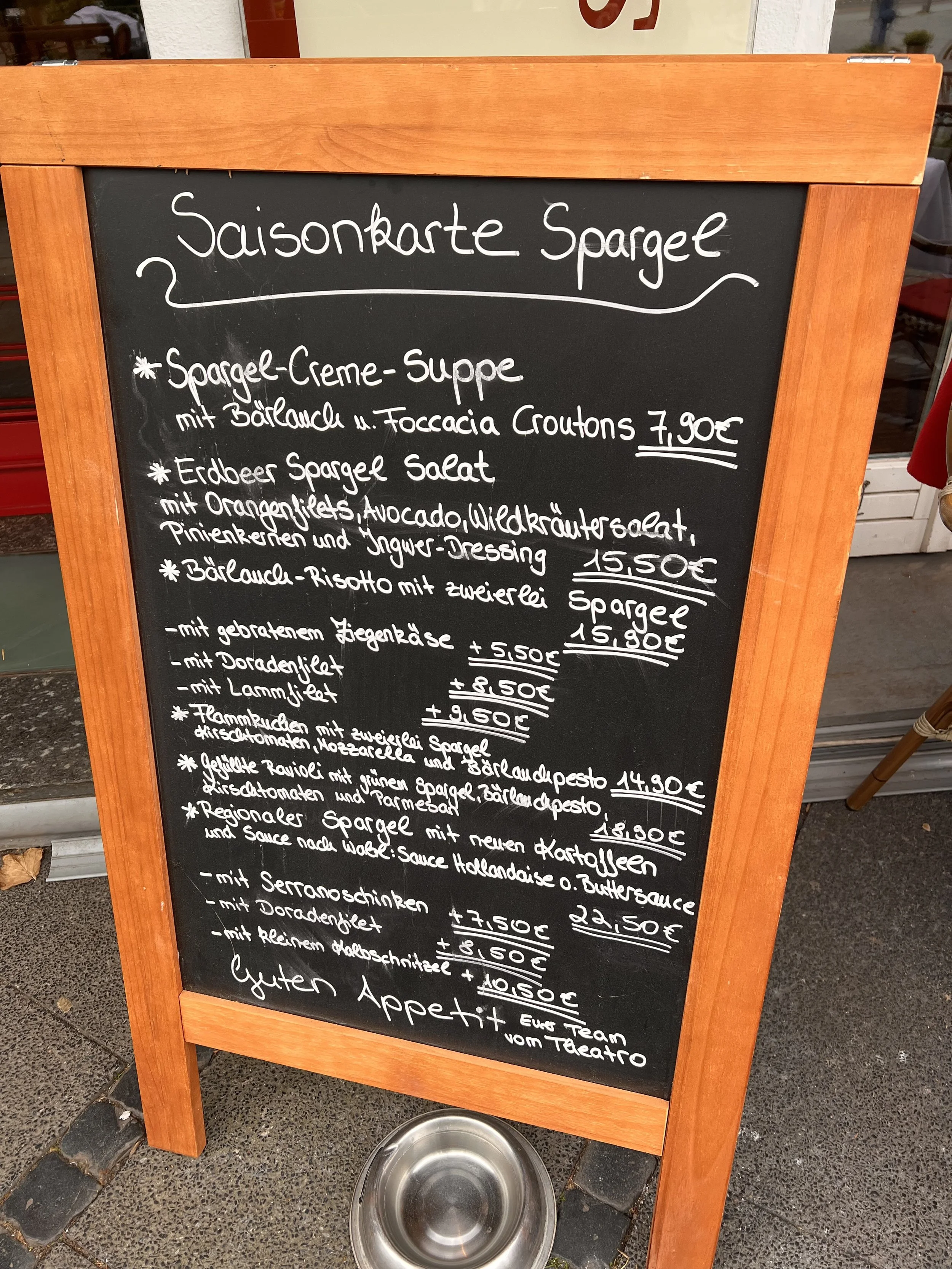
Germany’s Beloved Spargel Season on Full Display
A restaurant menu celebrating Germany’s famous Spargel (white asparagus) season, offering a wide variety of traditional dishes. During my stay in Bremen, Spargel seemed to appear everywhere—from restaurants and cafés to conversations around the table—becoming a recurring and humorous theme throughout the week.
The conversations over lunch were relaxed and full of laughter. After several intense days of activities, discussions, and preparations, these quieter moments became just as valuable as the official events.
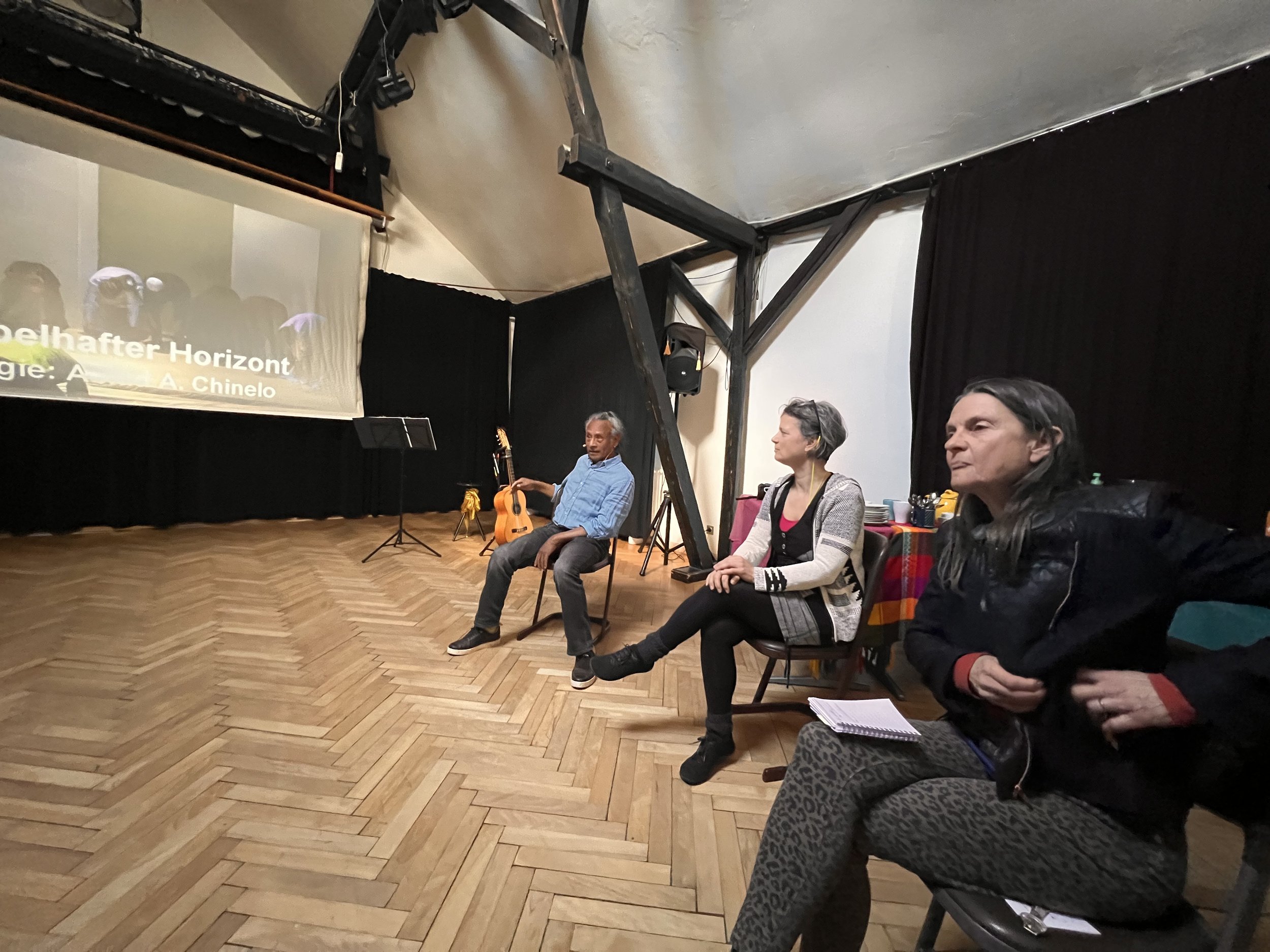
Exploring Art, Music, and Community at Chinelo Theater
Mahdi Yahya and members of Stiftung die schwelle visiting Chinelo Theater in Bremen, meeting with theatre director Abiud Aparicio Hernández and his colleague Vera to discuss intercultural dialogue, community theatre, and the role of art in social engagement.
Yet the day still had more surprises ahead.
In the afternoon, we visited Chinelo Theater, where we were welcomed by Abiud Aparicio Hernández and his colleague Vera. They introduced us to their work in intercultural and community theatre, sharing how they use artistic expression to bring people together and address social issues.
What I particularly enjoyed was that the visit was not limited to presentations. Music became part of the exchange. We listened, shared stories, and experienced firsthand how artistic expression can create connections between people who may come from very different backgrounds.
The atmosphere was warm, creative, and inspiring.
At that moment, my phone rang.
It was my friend Daniel.
He had driven almost eight hours from Dresden to Bremen simply to be present during this important week.
I was deeply touched.
In a world where people often struggle to find time for one another, Daniel had crossed half of Germany to show his support.
Without hesitation, I invited him to join us for the next event.
I did not yet know that his arrival would soon become part of one of the most memorable evenings of my entire stay in Bremen.
Chinelo Theater founder Abiud Aparicio Hernández and his colleague Vera share a special musical moment during our visit to the theater in Bremen. Through music and artistic exchange, they demonstrated how culture can create connections, foster dialogue, and bring people together across different backgrounds and experiences.
Music, Friendship, and an Unexpected Gesture

Anadolu – Ich singe nicht allein
Experiencing the powerful musical performance “Anadolu – Ich singe nicht allein” by Nihan Devecioğlu at Theater Bremen, a moving celebration of cultural diversity, memory, and shared humanity through music.
After our visit to Chinelo Theater, the day continued with one of the cultural highlights of my stay in Bremen.
Earlier that afternoon, my friend Daniel had called to tell me that he was approaching Bremen after driving nearly eight hours from Dresden. I was genuinely touched. In today’s busy world, it is rare to find people willing to travel such a distance simply to stand beside a friend during an important moment in his life.
When Daniel arrived, I immediately invited him to join us for the evening’s program.
The event was a performance of “Anadolu – Ich singe nicht allein” by the remarkable singer and musician Nihan Devecioğlu at Theater Bremen.
There was only one problem.
The performance was completely sold out.
For a moment, it seemed that Daniel would not be able to attend.
Then something happened that perfectly reflected the generosity I had experienced throughout the entire week.
Anette Klasing quietly managed to secure a ticket for Daniel.
Only later did I discover that the ticket had originally belonged to her husband.
This gesture touched me deeply.
Neither Anette nor her husband needed to do this. Yet they chose to give up their place so that a friend who had travelled across Germany could share the experience with us.
It was one of many small acts of kindness that made this journey unforgettable.
As we entered the theatre, I had no idea what to expect.
What followed was extraordinary.
“Anadolu – Ich singe nicht allein” was much more than a musical performance. Through songs, stories, and memories, Nihan Devecioğlu took the audience on a journey through the cultures, languages, and traditions of Anatolia.
Turkish, Kurdish, Armenian, Greek, and other influences came together in a powerful celebration of cultural diversity.
The performance explored themes of identity, migration, memory, belonging, and coexistence.
For someone coming from the Middle East, many elements felt familiar.
The melodies.
This video captures excerpts from “Anadolu – Ich singe nicht allein”, an inspiring musical performance by Nihan Devecioğlu at Theater Bremen. Blending songs, stories, and cultural influences from across Anatolia, the production invites audiences on a journey through shared histories and diverse identities, highlighting the power of music to connect people across cultures and generations.
The emotions.
The stories.
The idea that cultures are never isolated but constantly influence and enrich one another.
As I listened, I found myself reflecting on how similar many of our societies are beneath the political divisions that often dominate headlines.
Music has a unique ability to remind us of our shared humanity.
It reaches places that politics often cannot.
Throughout the performance, I looked around the audience and saw people from different backgrounds experiencing the same emotions at the same time.
This, too, is peacebuilding.
Not through speeches or negotiations.
But through shared cultural experiences that allow people to see one another differently.
When the performance ended, I left the theatre feeling inspired.
The evening had brought together so many elements that had defined my week in Bremen: friendship, generosity, culture, dialogue, and human connection.
As we walked back through the city, I found myself thinking about Daniel’s journey from Dresden, Anette’s unexpected gesture, and the powerful performance we had just witnessed.
None of these moments were part of the official award ceremony.
Yet they would become some of the memories I would carry home most vividly.
The next morning would bring another deeply emotional experience: a visit to Gesamtschule Ost in Bremen-Tenever, where music, young people, and an unexpected encounter with a Lebanese student would leave a lasting impression on me.
Music, Memory, and Hope at Gesamtschule Ost
On the morning of 8 May 2026, the day of the Bremen Peace Award ceremony, we travelled together with Daniel and members of Stiftung die schwelle to Gesamtschule Ost in Bremen-Tenever.
From the moment we entered the school, it was clear that this would be a special visit.
We were welcomed not with speeches, but with music.
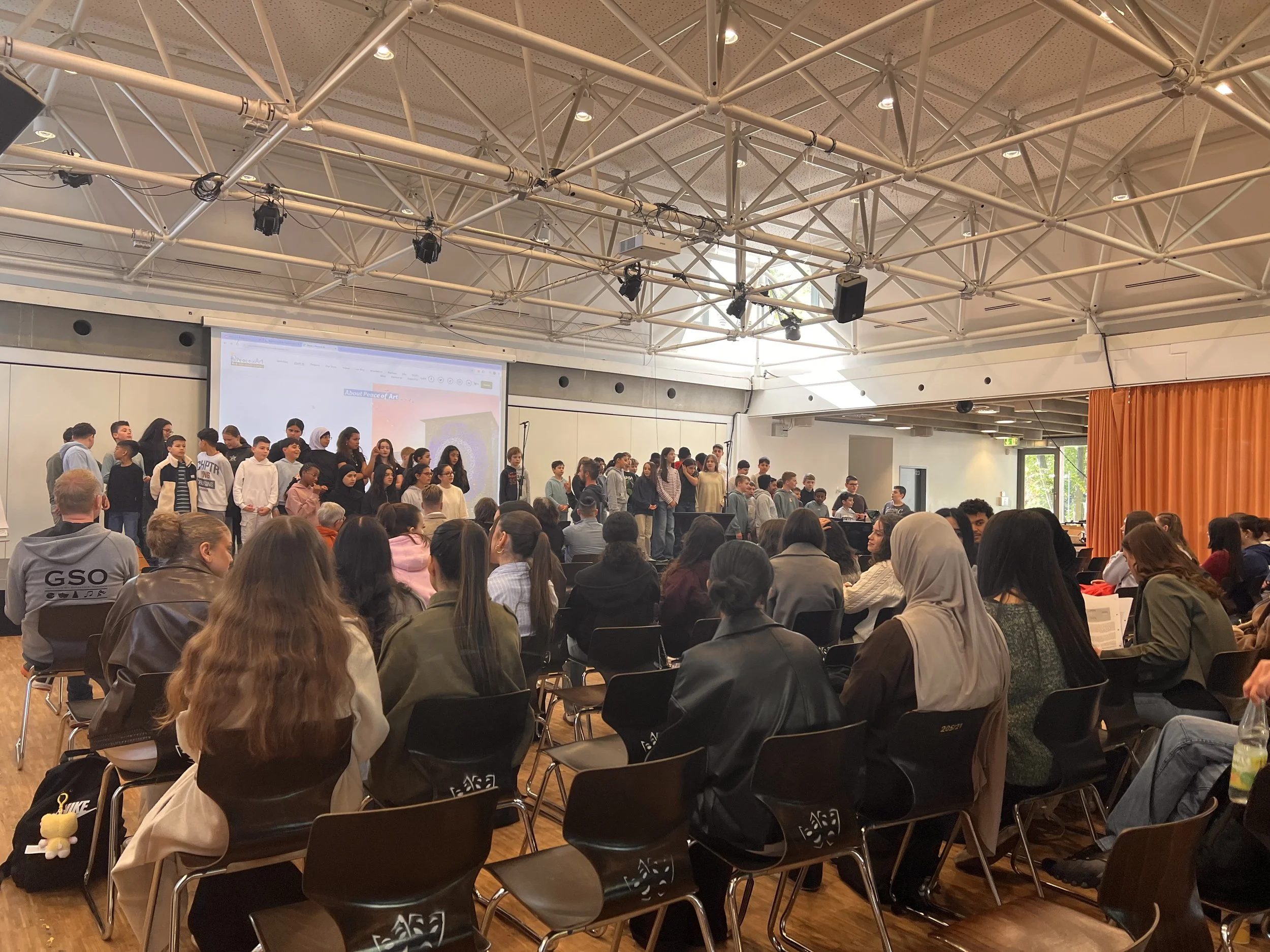
Young Voices United Through Music at Gesamtschule Ost
Students of Gesamtschule Ost in Bremen-Tenever welcome guests with a beautiful musical performance, demonstrating how music can bring together young people from diverse backgrounds and create a shared sense of community, creativity, and belonging.
Students from different age groups had prepared a beautiful musical performance, accompanied by piano. Watching them sing together created an atmosphere of warmth, openness, and joy. There was something deeply moving about seeing young people from different backgrounds standing side by side, united through music.
As someone who has spent years promoting peace through art, culture, and creative expression, I felt immediately connected to what I was witnessing.
Music has a unique ability to create community.
And that morning, the students demonstrated exactly that.
After the performance, Vera Al Mawla and I had the opportunity to present the work of Peace of Art.
We screened a video introducing our organization, our projects, and the communities we work with across Lebanon. We spoke about how art, sports, music, education, and dialogue can help young people overcome divisions and build stronger communities.
The students listened attentively.
What impressed me most was their curiosity.
They asked thoughtful questions about Lebanon, peacebuilding, youth work, and the challenges facing young people today. Some wanted to know more about daily life in Lebanon. Others were interested in learning how they could become active in their own communities.
Several students even asked how they could support or connect with organizations such as Peace of Art.
For me, this was encouraging.
It showed that young people are not indifferent. They want to contribute. They want to make a difference.
One moment from that visit will stay with me for a very long time.
After watching the video, one of the students approached us visibly emotional.
She explained that she was originally from Lebanon.
As she spoke, tears began to fill her eyes.
She shared how difficult it was for her to see the destruction and challenges that Lebanon continues to face. At the same time, she expressed how happy she was to see an organization from Lebanon being recognized internationally and speaking about peace, hope, and positive change.
Her reaction touched me deeply.
For a moment, the presentation was no longer about projects or awards.
It became something much more personal.
It became a reminder that every activity we organize, every workshop we conduct, and every young person we reach may have an impact far beyond what we can immediately see.
That conversation alone made the visit unforgettable.
After the school program, we shared lunch with Susanne Korhammer and Ivesa.
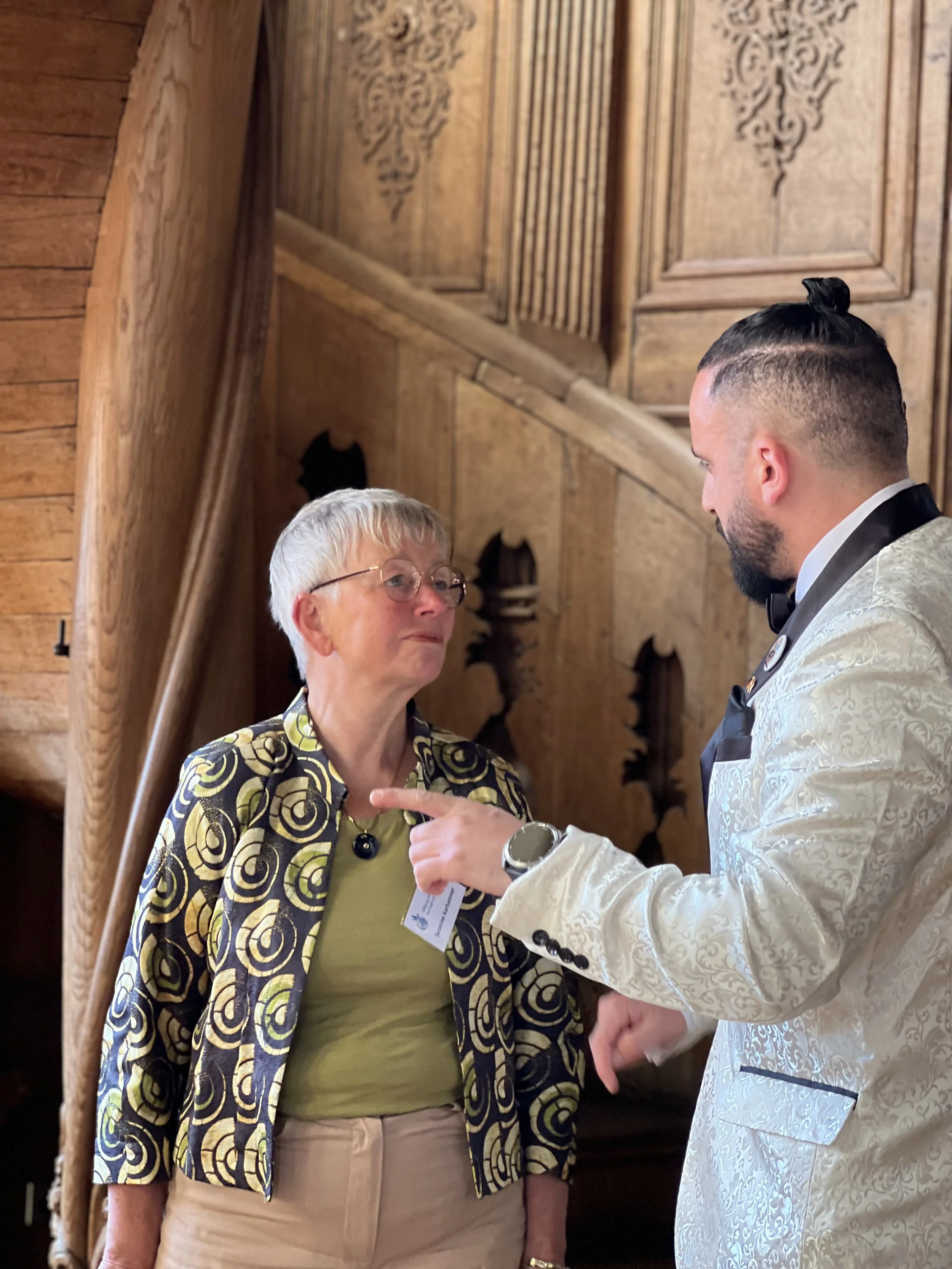
By this point in the week, I had already come to appreciate Susanne’s dedication and kindness. I had first met her in Dresden when she represented Stiftung die schwelle during the Dresden Peace Award. During our entire stay in Bremen, she was constantly present, helping, organizing, guiding, and supporting whenever needed.

Discovering Bremen with Susanne Korhammer
Susanne Korhammer shares her knowledge and passion for Bremen during a guided walk through the city. Through her stories, explanations, and personal insights, she helped transform a simple city tour into a meaningful journey through Bremen’s history, culture, and community life.
What I appreciated most was her positive energy and sense of humour. No matter how busy the schedule became, she always managed to create a relaxed atmosphere. Behind that warmth was also a strong commitment to human rights, particularly women’s rights and social justice.
People often see the public side of events such as peace awards.
What they do not always see are individuals like Susanne, whose dedication behind the scenes helps make everything possible.
Lunch also gave us another opportunity to spend time with Ivesa. Once again, I found myself impressed by her knowledge, her fluency in Arabic, and her deep understanding of both German and Arab societies. Throughout the week, she had become another example of the bridges that can be built between cultures when curiosity and openness replace stereotypes and assumptions.
As we finished lunch, excitement slowly began to build.
The moment we had all been preparing for was approaching.
In just a few hours, we would enter Bremen’s historic Rathaus for the International Bremen Peace Award ceremony.
At that moment, however, I was not thinking about awards.
I was thinking about the Lebanese student who had spoken to us earlier that morning.
Her tears, her honesty, and her hope reminded me exactly why Peace of Art exists.
And they reminded me that behind every recognition, every ceremony, and every achievement, there are real people whose stories give meaning to the work.
A Dream Standing in the Rathaus
As the afternoon of 8 May 2026 approached, we made our way to one of Bremen’s most iconic landmarks: the historic Rathaus.
I had already admired the building from the outside during my walks through the city with Anette Klasing. But nothing prepared me for what awaited inside.
Crossing the entrance felt like stepping into another era.
The craftsmanship, the historic halls, the carved wood, the paintings, and the atmosphere of centuries of history immediately captured my attention. Everywhere I looked, there were details inviting reflection. The building itself seemed to tell the story of Bremen’s long history as a free city connected to the world.
One of the details that fascinated me most was the presence of maritime symbols throughout the building. Large fish sculptures, references to Bremen’s relationship with the sea, and impressive whale jaw bones suspended almost like chandeliers reminded visitors of the city’s maritime heritage.
Standing there, I found myself thinking about a very different place.
North Bekaa.
I thought about where this journey had begun.
I thought about the first Peace of Art activities organized with very limited resources. I thought about the volunteers who believed in the idea when there was little certainty about the future. I thought about the challenges, setbacks, financial difficulties, and moments when continuing seemed impossible.
Highlights from the Bremen Peace Award Ceremony 2026
And suddenly I felt overwhelmed by gratitude.
Not because I was standing in a beautiful building.
But because I understood how many people had contributed to making that moment possible.
Slowly, guests began arriving.
Representatives of civil society organizations, local authorities, journalists, supporters of Stiftung die schwelle, members of the Bremen community, and friends of the award recipients filled the hall.
Among them were many familiar faces from the previous days: Anette Klasing, Petra Titze, Beate Löwe-Navarro, Jenny Kauther, Thomas Joppig, Susanne Korhammer, Ivesa, Daniel, Vera Al Mawla, and many others who had invested countless hours in preparing this special week.
As the ceremony began, I felt a mixture of pride, humility, excitement, and responsibility.
This was not simply a celebration of individual achievements.
It was a celebration of people who dedicate their lives to building peace in different ways and in different places.
The ceremony also honoured Mate ni Kani, whose work supporting women and girls affected by violence and exploitation had earned international recognition. Meeting their representatives throughout the week had reminded me that peacebuilding takes many forms, but always begins with human dignity.
As speeches were delivered and the stories of the award recipients were presented, I found myself reflecting on the incredible contrast between where Peace of Art started and where we stood today.
From a small village in North Bekaa.
To one of Germany’s most historic and respected institutions.
From local community activities.
To international recognition.
It felt almost unreal.
When my name was called and I walked forward to receive the International Bremen Peace Award 2026 in the category of Pioneering Peace Work, countless memories passed through my mind.
Faces.
Projects.
Workshops.
Children.
Volunteers.
Partners.
Communities.
Every person who had contributed to this journey seemed present in that moment.
I knew very clearly that this award did not belong to me alone.
It belonged to everyone who had helped build Peace of Art.
When I looked toward Vera, I felt a special sense of gratitude. From the earliest days of the organization, she had remained committed to our vision, believing in the project through every challenge and every success. Seeing her there in the Rathaus made the moment even more meaningful.
As I delivered my speech, I felt proud not only to represent Peace of Art, but also to represent Lebanon.
Too often, Lebanon appears in international headlines because of crises, conflict, economic collapse, or political instability.
That evening, however, Lebanon was being represented through creativity, resilience, peacebuilding, and hope.
For me, this carried special significance.
The ceremony itself was beautifully organized, reflecting months of preparation by Stiftung die schwelle and its dedicated team. Every detail had been carefully considered, and throughout the event I found myself thinking of Petra Titze, whose tireless work behind the scenes had helped make the entire week possible.
When the formal program came to an end, many guests approached us to exchange congratulations, ideas, and experiences. Conversations continued throughout the Rathaus, creating exactly the kind of atmosphere that peacebuilding requires: people meeting one another, listening, learning, and building relationships.
At that moment, I realized something important.
The award itself was not the most valuable thing I would take home from Bremen.
The most valuable thing was the people.
The friendships.
The conversations.
The trust.
The sense of belonging that had developed over the previous days.
And the evening was not over yet.
After months of preparation and a week full of activities, there was finally time for everyone to relax, celebrate, and enjoy the achievement together.
Leaving Bremen, Leaving Friends Behind
After the ceremony concluded and the official photographs were taken, the atmosphere changed completely.
The tension, anticipation, and excitement that had accompanied the previous days slowly gave way to something much more relaxed.
Relief.
Joy.
Celebration.
For the first time all week, everyone involved in organizing the Bremen Peace Award could finally take a breath.
We gathered together for dinner, sharing food, conversations, and laughter after months of preparation and an intense week of activities. Looking around the table, I could see a different side of many people I had come to admire during my stay.
Petra Titze, who had spent months coordinating countless details behind the scenes and who seemed to be everywhere at once throughout the week, could finally relax. Since the very first email informing me that Peace of Art had received the award, Petra had accompanied every stage of the journey. From logistical preparations to media coordination, guest management, scheduling, and solving unexpected challenges, she had carried enormous responsibility with remarkable professionalism.
That evening, however, I could finally see her enjoying the success of what she and the entire Stiftung die schwelle team had accomplished.
It was well deserved.
Around the table, conversations flowed naturally. We spoke about the events of the week, memorable moments, future ideas, and shared experiences. There was laughter, storytelling, and the feeling that the formal program had given way to genuine friendship.
As I looked around, I realized how fortunate I had been to meet so many remarkable people in such a short period of time.
I thought about Anette Klasing.
What had started as meeting the Chairwoman of Stiftung die schwelle had become something much more personal. Throughout the week, she had shared not only her city, but also her experiences, her stories, her networks, and part of her life’s journey. Her decades of commitment to human rights, peacebuilding, intercultural dialogue, and international solidarity left a deep impression on me. For anyone working in civil society, she represents what long-term dedication and conviction can achieve.
I thought about Beate Löwe-Navarro and her husband.
Their home was one of the first places we visited in Bremen, and their hospitality set the tone for everything that followed. The warmth with which they welcomed Vera and me made us feel less like visitors and more like friends. Even now, I can still remember the dinner table, the conversations, the Chilean Pastel de Choclo, the Lebanese music, and the feeling of being genuinely cared for.
I thought about Jenny Kauther.
Her openness toward other cultures, her experiences accompanying refugee families, and her efforts to learn Arabic reminded me that meaningful dialogue begins with genuine curiosity about others.
I thought about Thomas Joppig, whose interest in stories and people reflected the importance of journalism in building understanding between communities.
I thought about Susanne Korhammer, whose energy, humour, and constant support accompanied us throughout the week.
I thought about Ivesa, whose deep knowledge of Arabic language and culture continually surprised and impressed me.
I thought about Daniel, who drove eight hours from Dresden simply to be present and share this important moment with me.
And I thought about Vera Al Mawla.
No reflection on Bremen would be complete without acknowledging her presence throughout the entire journey. From the earliest days of Peace of Art until this moment in Bremen’s historic Rathaus, she remained one of the strongest pillars of the organization. Every success, challenge, setback, and achievement was part of a shared journey.
As the evening drew to a close, I began to feel something unexpected.
Sadness.
Not because the week was ending.
But because I knew I would soon be saying goodbye to people who had become important to me.
In only a few days, Bremen had transformed from an unfamiliar city into a place filled with memories.
The streets were no longer simply streets.
They carried conversations.
The buildings carried stories.
The people carried friendships.
When the time finally came to leave Bremen, I felt as though I was leaving a family behind.
Of course, we would remain connected.
Of course, we would meet again.
But there was still something emotional about departing from a place where I had felt so welcomed, appreciated, and understood.
As the journey home began, I found myself reflecting on everything that had happened.
The award.
The schools.
The museums.
The theatre.
The discussions.
The meals.
The friendships.
The laughter.
The unexpected moments.
And I realized that while the Bremen Peace Award would always remain a special milestone in my life, what I would remember most were the people.
People who dedicated their lives to building peace.
People who opened their homes.
People who shared their stories.
People who believed that dialogue is stronger than division.
This award belongs first to Vera Al Mawla, who believed in Peace of Art from the very beginning and remained committed through every challenge and every success.
It belongs to my family, whose support made this journey possible.
It belongs to every volunteer, trainer, artist, youth worker, and participant who contributed to Peace of Art over the years.
It belongs to our partners, supporters, and donors who trusted our vision.
It belongs to the communities we serve across Lebanon.
And it belongs to every child and young person who chooses creativity over violence, dialogue over division, and hope over despair.
From a small village in North Bekaa to the historic Rathaus of Bremen, this journey has taught me one simple lesson:
Peace is never built alone.
It is built together, one relationship, one conversation, and one act of kindness at a time.