Empowering Young Migrants Through Art and Culture: Peacebuilding and Political Engagement Workshop in Dresden
Dresden, Germany | 27 October 2020
On 27 October 2020, Peace of Art Germany partnered with ARBEIT UND LEBEN Sachsen to organize a workshop entitled “Art and Culture in Peace Building and Political Engagement of Young Migrants” at the Dresden Foreigners Council (Ausländerrat Dresden). The initiative brought together young migrants and community members to explore the role of art, dialogue, and civic participation in fostering peaceful coexistence and strengthening social inclusion.
The workshop was facilitated by Mahdi Yahya, Founder and Chairman of Peace of Art International, alongside Abdulaziz Bachouri, Director of the Fair Integration Project. Together, they guided participants through an interactive learning experience designed to encourage critical thinking, community engagement, and active participation in democratic life.
The first part of the workshop focused on understanding the concepts of peace, conflict, violence, and war. Drawing on Peace of Art’s experience in peacebuilding and youth empowerment, Mahdi Yahya encouraged participants to reflect on the root causes of conflicts and discuss how communities can respond through dialogue, mutual understanding, and nonviolent approaches. Participants shared personal experiences and perspectives, creating a safe space for meaningful conversations on coexistence and conflict transformation. (Peace of Art)
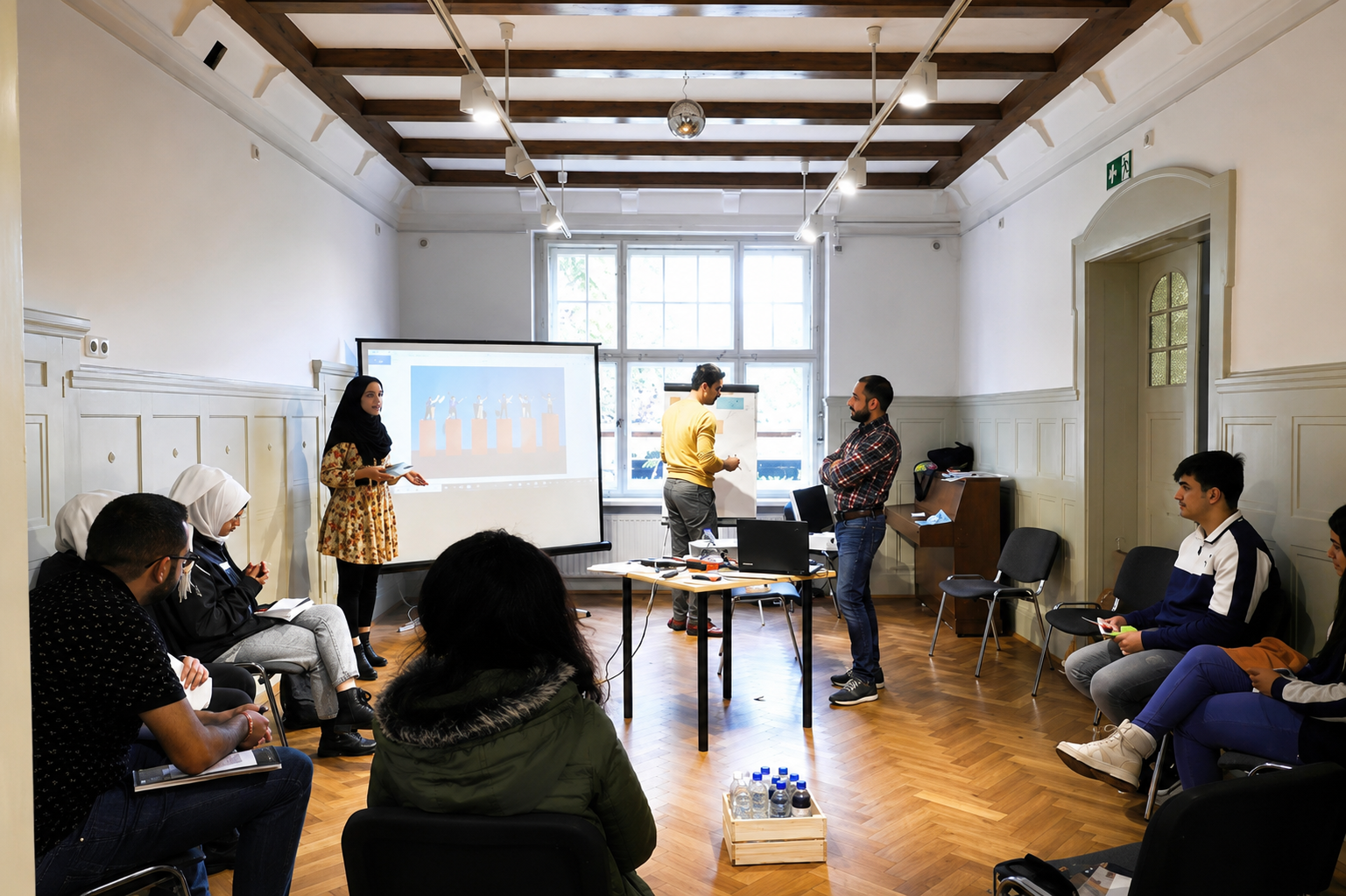
Through group discussions and practical exercises, attendees examined different forms of conflict that can emerge in everyday life and explored methods for recognizing tensions before they escalate. Particular attention was given to the role of communication, empathy, cultural understanding, and artistic expression in promoting peaceful solutions.
A central theme of the workshop was the transformative power of art and culture in peacebuilding. Participants discussed how artistic activities can create opportunities for dialogue between diverse communities, challenge stereotypes, and strengthen social cohesion. This approach reflects the core philosophy of Peace of Art International, which views creativity as a catalyst for peace, inclusion, and positive social change.
The second part of the program focused on political engagement and civic participation. Abdulaziz Bachouri introduced participants to opportunities available for migrants to become actively involved in Saxon society. Discussions covered democratic participation, community initiatives, local decision-making processes, and ways in which migrants can contribute to social and political life while advocating for their rights and interests.
The workshop was particularly relevant in the context of increasing discussions across Europe regarding integration, social participation, and intercultural dialogue. By combining peace education with civic engagement, the initiative aimed to empower young migrants not only as beneficiaries of integration efforts but also as active contributors to their communities.
The event also highlighted the importance of supporting migrant voices and creating platforms where individuals from diverse cultural backgrounds can exchange ideas, share experiences, and build meaningful connections. Such initiatives contribute to stronger, more inclusive societies by encouraging participation, mutual respect, and a shared sense of belonging.
For Peace of Art Germany, the workshop represented another step in its mission to promote peacebuilding, intercultural dialogue, and social cohesion through education and culture. By bringing together young migrants, peacebuilders, and community leaders, the event demonstrated how creative and participatory approaches can contribute to building resilient communities and empowering future leaders.
The workshop reaffirmed a principle that continues to guide the work of Peace of Art International: sustainable peace is achieved when individuals are empowered with knowledge, encouraged to participate actively in society, and provided with opportunities to transform diversity into a source of strength rather than division.
